Tuesday, October 31, 2006

Rosamund Purcell

I first came across her work which was used in Nat Geo feature written by Carl Zimmer.

She's been called the doyen of decay. I can see why. She is among other things, a museum photographer, so a lot of the stuff she shoots is dead. When she shot some marine creatures at Woods Hole she actually said that she doesn't see too many alive specimens!

It must be a strange thing to see animals, so inanimate and yet create images that inform their biology. As it were a photographs compress so much. They're a single snapshot, static & they're two dimensional. But I think she does justice to her subjects. She actually manages to add certain degree of dynamism and mystery to her images.

A Wildlife photographer? Maybe, but shes a much more expansive artist than that. She's done many books, exhibitions and collections on things that range from images of extinct animals to dice(!). In another book Owl's head she goes through the keepings of junk dealer in a more modern version of archaelogy to understand us and our recent history through our discardings.

(Just as an aside, here's a sort of related project, a recreation/imagination of what dodo behaviour, ecology might seemed like when they were alive.)

The photograph is copyright Rosamund Purcell, from here.

Thursday, October 26, 2006

Hampi


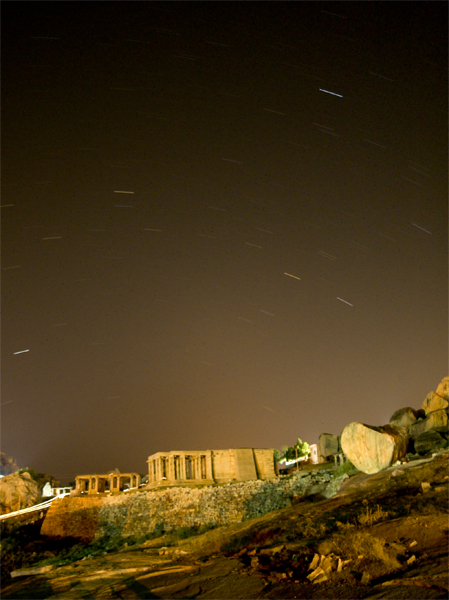
I took a break this weekend and went to Hampi. I shot things that weren't alive! The first is the Kadlekalu Ganesha temple on Hemakuta hill by night. The other the pretty stepped tank. The third shot is the Virupaksha tower at dusk.

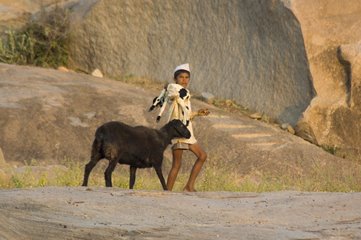
I even shot pictures of human beings.

And I even managed to wake up early in the morning!

OK, just for those people who want to go at some point. We got a lot of help from the internets, so heres some in return. We took a train, the Hampi Express to Hospet from Bangalore and were there at 6:10ish in the morning. Walked to Hospet bus stand which is about a 10 mins walk away and got a bus to Hampi almost instantly. When we got to Hampi, we were instantly accosted by folks pushing their lodges. We'd heard of Padmas lodge which is just a minute away, she had a decent room and roof which overlooks Hemakuta hill, so we took it. Theres water all day long, but no hot water. If you want that you have to ask for it. But even in October its hot so you don't really need it. Got a Kinetic for about Rs. 150, took 1.5l of fuel which was too much, about 1l should be enough, unless you're going to drive to the Vithalla temple which is a 12 km drive or a 2 km walk, guess which one we did? If you have the time, consider a cycle, it might be more fun.

Spend a couple of days if possible, the ruins are quite spread out and anything less than 3 days is a rush. We had to. I won't tell you too much about this, there are websites you can look stuff up on and decide what you want to see. Try and catch the sunrise from Matanga hill especially if you love rocky terrain. Its very beautiful and you will feel very virtuous for having gotten up early, at least I did. The climbs interesting and you'll meet the monkeys along the way, who seemed quite harmless to us, so don't worry about them.

Try and eat at least once at the Mango tree restaurant which is by the river. The foods faux European for the firangs and slow-train-coming & for-the-firangs Indian but the locations lovely. Be warned, food in general was slow in coming, its a good practice to ask what'll be quick if you're in a hurry. And when they say 10 mins, it might mean 10 mins to 30 mins!

On the way back we caught a bus out of Hampi at 18:00 and were in Hospet by 18:30, the last one out is at 7:00. Theres a Yatri Niwas on the way to the station which looked decent in which you could eat. We took the Garib Nawaj train at 20:20, which unfortunately runs only on Tuesdays. Unfortunate because it gets to B'lore at a very timely 6:00. The returning Hampi gets here at some ungodly 4 or 5!

C'est tout.

PS: the boy says my timings are way off, and add anywhere from 15 mins to 30 mins to all my durations! The last picture is of the town, yup, thats all of it!

Friday, October 20, 2006

Shell wildlife photographer of the year announced.

Mosey on over and have a look at the award winners. You can leave a comments as well. I would love to see them at the nhm, tiny images on the website dont really do that much justice to some of the images.

Monday, October 16, 2006

Apocalypse now

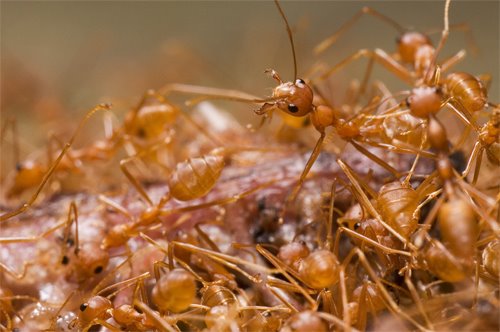
Wonder why this reminds me so much of that sometimes edited out scene. Oecophylla, the pirhanas of the insect kingdom.

Sunday, October 15, 2006

Placing internationally is GOOD for the ego


Update:
I'm skipping one post and going on to this one which provides info that made me *very* happy! The added bonus is that you get to know which picture made the finals...

It has shown up here. Check out the 2005 finalists, I'm week 1 in October
>>>>>>>>>>>>>>>>>>>>>>>>
I just got an email telling me I'm a finalist in the National Wildlife Federations 2005 photography competition!!!!!! Yea!!!! I think I'm a bit giddy!

Originally posted: Nov 15 2005

Tuesday, October 10, 2006

Talking some more

When he still wrote a free and regular column called the Sunday morning photographer, Mike Johnston was one of my favourite reads. One of my utterly favourite column was called "Scenic fatigue". I think I'm going through that sort of fatigue with shooting in general, I get exhausted just looking at my pictures.

Oh, I don't think I'm doing unfocused photography, there is a story to tell (more about the story itself when I feel like telling). Just sometimes I think that theres a huge danger in nature photography that you'll have everything just so and empty it of photography and leave it all biology or worse, prettiness. The interesting subject, rule of thirds, perfect light, colours, sharpness, low grain, selective focus, the little catchlight in the eye, the action/dynamism shot....you know. There are too many conventions/rules in this business. And too many times keeper shots are keepers because the meet an appropriate convention.

How do you break this little problem, cause all of those conventions do have a reason you know? They make things look...good. In a certain way. So I think I'm getting on a mission now, to find images (not necessarily mine), nature photography images that look good while breaking at least one convention... and then see whether I can work through, why the image works....lets see how it goes...

(I'm using this image for criticism, which I believe is ok under the fair use clause of the US copyright act. I've linked the originals and credited the author.)

We'll start with the obvious guy, Mike 'Nick' Nichols. He's a out there 'I dont want to make pretty pictures' nature photographer. This compelling shot was taken as part of his project called 'Brutal kinship' on the nature of the relationships between humans and chimpanzees.

It's not a pretty picture, and some would argue its not even a nature picture. Does it break conventions? Some, you dont see the eyes of the animal, the face is hacked at the chin. (This is probably so its possible to look at the picture without turning away in disgust.) Its a portrait of an animal with no identity, which defies the genre portrait itself.

There's blood in the image and theres no denying the agony in those hands being restrained. The animal frames his own blood as in an act of display; "here, here's my death". There's no attempt however to prettify it, neither to judge the death as needless. The syringes, the tubing both suggest medical intervention in some form. Either an attempt to save the animal or maybe what caused the death in the first place.

The caption tells us its a chimp that died of systemic failure after a vaccine against HIV almost worked on it. It almost saved so many lives but died. Its a matyr's image. Its not an image of an animal, its an image of what happened. Its littered with clues to what might have happened and leaves us to figure it out before the caption reveals it. I think the tension already exists in the image, the justification of the death is ambiguous, and yet this is not an obvious 'animal rights' image. It becomes more so with the caption. But it does not lean so far as to condone the whole extreme animal rights stand of never using animals for research. Its a marvellous walking of the thin line, and in my opinion its why it works.

Friday, October 06, 2006

In a hurry, gotta go

Those of you who've been wondering what I've been upto, sorry. I've to pay attention to a few other things right now, which means I cant really do this. So instead I thought I'd link you to a few other (amateur, whatever that means!) Indian wildlife photographers that I like.

Theres Kalyan Varma whos also a Bangalorean, and he has a few other interesting projects going, which unfortunately dont seem to have taken off that much. The PlanetWildIndia in particular has quite a bit of potential. Imagine being able to use it as a travelogue to find new and interesting places, particularly those that are within reach to shoot in! I suppose there are already lists with that sort of information on them that one could use. It would be nice to get that kind of information/resource list together.

Kalyan's got a couple of friends , who I don't personally know, who're pretty good photographers themselves, I was pretty impressed by Sudhir Shivram. There are others, but what I think distinguishes these guys is their dedication to this stuff despite other day-jobs. There are others, leave a link if you know of any that you think should not be missed.

Tuesday, October 03, 2006

Monday, September 25, 2006

New species

There's been a lot of buzz about new species of late. The most recent surprise was the ant that was found in IISc. Our campus is home to over 90 ants, whats a new one right? Well no, ants have been worked on for ages, they're probably among the better documented insect species.

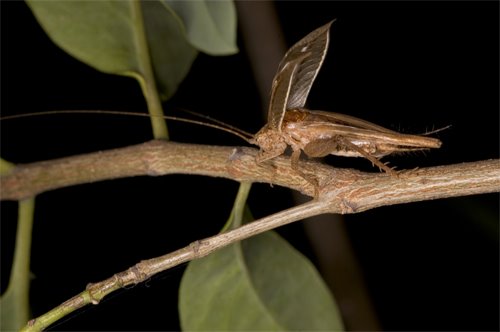
Crickets on the other hand have definitely received less attention. The male you see singing in the photographs belongs to the species Prozvenella bangalorensis. It was also discovered on the IISc campus. You can see another picture here and also hear the call which is actually pretty nice, unlike many other stereotyped repetitive calls.

So how many campuses do you think can live up to that challenge? Two species discovered and described from it? My guess would be not too many, but other folks in India and in the tropics were looking in their backyards, particularly at neglected insects, my suspicion would be quite a few.

Thursday, September 14, 2006

Bio-inspired

The most recent issue in Science, has an feature on arrays that mimic the hair cells in our ears! Hair cells, ears?

Ok A simple summary: when a pressure wave hits your eardrum, your eardrum transfers its oscillations via three bones (ossicles) to the inner ear. The inner ears roughly a long coiled up tube which is full of water and on the inside of which there are hair cells. When the compression waves are transferred to the water, this causes stereocilia on the hair cells to move. The movement dislocates the stereocilia, and the forces generated by this movement break thin single protein filaments that hold a channel closed, opening the channel. Its a way of transducing mechanical energy into a electrical signal. Ions rush about, various upstream things happen, the upshot - we hear.

The basic mechanism remains more or less the same, across ear types, even insect ears. Its also used by fish, to sense pressure changes in the water using whats called the lateral line. This helps them detect and avoid predators, etc, even stationary objects which would alter water flow patterns.

This multidisciplinary team has made a sensor for detecting flow using this basic idea. Their sensors are fabricated using photolithography, and are about a few hundred micrometers, a hundred times the size of the real thing. I suppose they could go use some new nano technique to make them smaller, (I know squat about any of this tech bit I should add).They are however, said to be 10 times as sensitive. But more noisy, and to combat the noise they're looking back to the biology.
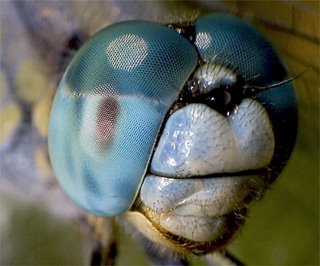
The other recent bio-inspired thingey that I read about, also in a Science article, was the compound eye. They made a micro lens, a cone, rhabdomere and everything. Its scary to look at the SEM of the fabricated structure, it looks like it could actually be an eye! They've off course already begun working on a thin camera based on this eye. There are images in that link and all kinds of tech to describe lenses that gets used even for conventional lenses. I dont see any 90 deg FOV images and they still seem a bit noisy. But this is an innovation to keep an eye on!!!

What amazes me about these new technologies is how direct their inspiration is. They're taking biological solutions almost as is. To suggest a counter-example, look at neural nets, they're an old established method now. They were 'inspired' by neurons, but the actual analogies are only very broad and sketchy...I dont know enough but for just one the connectivities are too high, the neuron in real life has architechture which affects function, which a perceptron/cognitron doesn't. There are different kinds of neurons...etc, etc.

The point being they were sort of like, tried to capture essential features but not details. Both of the above examples seem to capture quite a few details. And I wonder why. I didnt really find the reasons in the original articles themselves. The answer lies somewhere in the mix of size, sensitivity, dynamic range, and structural solutions to computational problems I think. In these cases perhaps the answers are in size and sensitivity.

However structural solutions, I think are a very elegant feature of biological systems. I'll give you an example. Our ear is made in a strange way, the basilar membrane which line the inner canal has different a thickness and stiffness at each point, and this causes it to resonate to different frequencies. Therefore the hair cells on that portion of the basilar membrane respond best to a narrow range of frequencies. There are other processes that sharpen the tuning, but this remains to be seen as the principal source of frequency tuning in the ear. Voila, an Fourier transform using a structure.

Point being, bio-inspired stuff is way cool!

Sunday, September 10, 2006

Grasslands

You've probably seen the other picture of the Streaked fantail warbler. But this one tells the story better. Now renamed the Zitting Cisticola, this warbler is small insectivore that forages among high grasses. The name comes from its courtship call which is accompanied by an aerial display. The only place you can see this bird in IISc is the Airfield. I would reccomend going down and having a look see, this is breeding season and you might get to see just how loud a bird merely 3 inches long can be. Try early morning and remember if you get rid of your grasslands you will never hear sweet sweet sweet again.
I love this image for all the sharp colourful verticals its got. The white fluff at the edges, breaking the sharp lines. And of course my miserable selective focus, the bird couldve been sharper and clearer. I guess its a ok animal in habitat pic. Check out the poor guys legs though, you think you can do that?

This superb habitat, the Airfield is possibly one of the least disturbed in IISc. (Except for labour from NIAS fertilising all over the place and the dumping of cut logs from the newly cleared area where faculty quarters were built). And it has a few species that are absolutely exclusive to it, the ZC, the two species of lapwing. And this lark I have trouble identifying.

Friday, September 08, 2006

Kamblipucchi

Or blanket worm is what the Kannadigas call one of these. I got one of these on my neck today and suffered some painful rashes as a result. I suppose that's the downside of so much diversity? All kinds of things can give you trouble?

The setae of some this caterpillar are called urticating hairs. Urticating refers to urticaria, a particular kind of allergic reaction. They are hollow and contain liquids secreted by trichogen cells at the base of the setae. The setae are meant to be defensive. The toxins they contain can apparently be quite diverse, ranging from protease like proteins, to histamine analogues, to anticoagulants. The result of having one of these dump its chemical load in your skin can range from rashes, to heart arrhythmia(!) to paralysis, seizures (!!) etc, depending on the species the caterpillar belonged to. There's a particular genus of south American saturnid moths called Lonomia that have caterpillars that are so bad they can kill you! The spines carry anticoagulants (same thing leeches use) that are very potent. They apparently have a fatality rate equivalent to rattlesnakes!!

Interestingly there are specific medical terms for these symptoms, Lepidopterism if it was a butterfly caterpillar, but moth caterpillars are usually worse, and that's called erucism.

On another completely other tangent, a long time ago Robert May, yes 'the' Robert May stopped by at our lab when he was visiting IISc. He told me about stridulating caterpillars when I was showing him my crickets. He didn't seem to know however why they do this. Some ants and caters are known to communicate, using vibration though. Maybe he was talking about these?

Wednesday, September 06, 2006

Yellow Pansies/Pansys?

Anyway, dont know whats going on here. Does anyone else?

Both butterflies look exactly the same on the inner wings. Don't think these are sexually dimorphic butterflies. The one thats flying did this for several minutes, occasionally landed next to the sitting butterfly. The flight was more 'fluttery' than usual. When the flying butterfly landed, it's head was usually pointed at the end of the abdomen of the other butterfly but I couldnt make out what was happening. I guess this is butterfly courtship.

But it didnt end in mating, so I amnt sure. I've heard of territoriality in butterflies, but the sitting butterfly didn't run, so I guess not.

Anyone surer than me?

Thursday, August 31, 2006

Making waves

Ever noticed these black beetles in ponds when it rains, they seem to be calm and then suddenly as you approach them they go crazy. Skittering about swimming fast like madcaps? That behaviour has earned them the name Whirly-gig beetles.

They're aqautic for their entire life, eggs are laid on submerged plants. Larvae live underwater and predate on mosquito larvae making them great pest control agents. The adults are also predaceous and usually swim on the surface When required they can dive like many aquatic insects with air bubbles trapped between wings for respiration. What they seem to be most studied for is aggregation, signalling and predator response. They release chemicals when disturbed which alert the others in an aggregation.

The coolest thing about them in my opinion however is that they're eyes are split. The lower half of both eyes are adapted for underwater vision and the upper half for vision in the air!

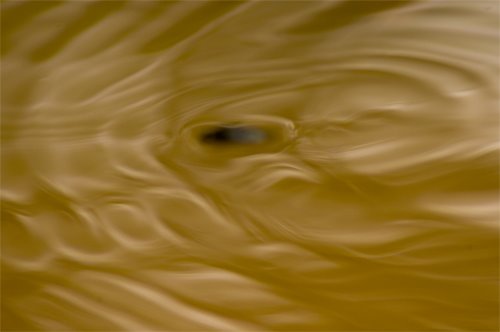
Some of those fluid mech / engineering types have also done some work on their swimming patterns and the waves they generate. So maybe the above image is interesting to them?

Sunday, August 27, 2006

Insect ears

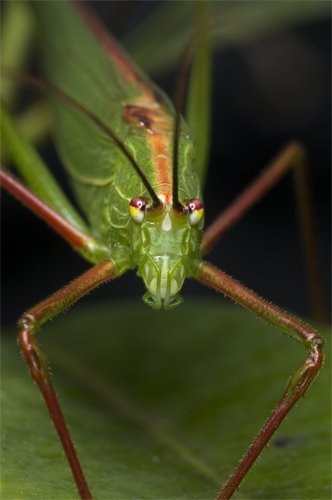
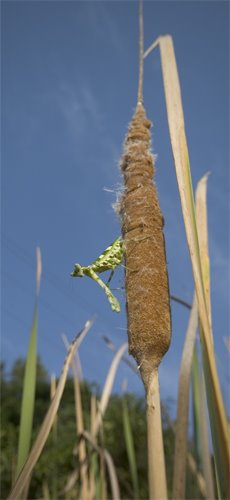
I work on crickets and when i tell people about one of the things that always gets them is that crickets have ears on their legs. Look just under the leg joint in the bushcricket picture, can you see that slightly inflated region? Thats the ear (well sort of, it leads to the ear, thats a tympanal slit).

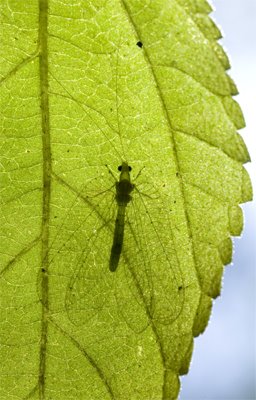
Insects have ears, literally, all over. They've evolved independantly among insects almost a dozen times over. They're on legs, abdomens, and they're on wings! In the neuropterans, ie lacewings, like the one in the picture, the ears are on the wings!


Well, mosquitoes and bees hear with their antennae. Actually, if I have it right, they hear in the near-field, so they detect particle motion not pressure, unlike the other ears I'm talking about. The resolution those systems manage is so great that they apparently can pick up even motion at even angstrom scales! Thats pretty impressive, and possibly almost on the absolute borderline of physical possibility.

The other weird ear in the insect world belongs to mantises, they have a single ear. Now if you remember your basic physics, sound is scalar and does not have directional cues. So to tell where sound comes from animals have evolved two ears and several physical and computational tricks. But this hinges on having more than a single ear, which the mantises dont have. Why is that?

The thing about ears in insects is that they seem to be easy to build. Ingredient one : you need an air space which insects have everywhere because of their tracheal breathing tubes.

Ingredient two and three: receptors and neurons. First you need something to sense the vibrations of the tympanic membrane you strung across this empty space. Then some neurons to carry these signals away to the 'brain'.

And those are everywhere in insects as well. See they (actually all of us) have these receptors called proprioceptors that detect mechanical stimuli. They're meant largely to figure out things like ok, legs bending now, and now the wings out, theres x amount of resistance on leg 2 and so on. To provide feedback to the brain on how well its commands to the motor system are being carried out. Now these have neurons connecting them up to some ganglion and then to a higher 'brain'. So if you can rearrange your proprioceptors to detect tympanal vibrations and your neurons to carry the signals, voila, you have a ear!

Actually why spend all that energy on making a ear though? Predator avoidance comes the pat reply, particularly, BATS!

You know this cool thing I read about this proprioception stuff, in one of the first insect walking robots they made, they didnt think about the interaction between the robot and the surface it was to walk on. And there was no feedback of the kind proprioceptors provide. If memory serves, that robot tore itself apart as it walked!

Oh look

That would be us! Considering the prices I guess I would do this to me gear seller?

Friday, August 25, 2006

Spot billed pelicans

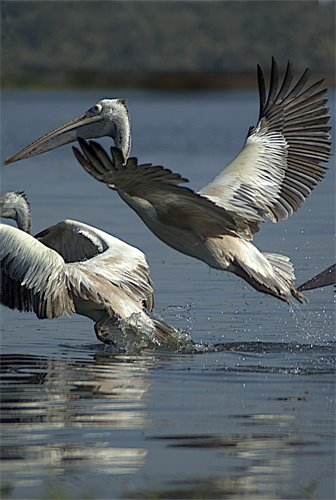
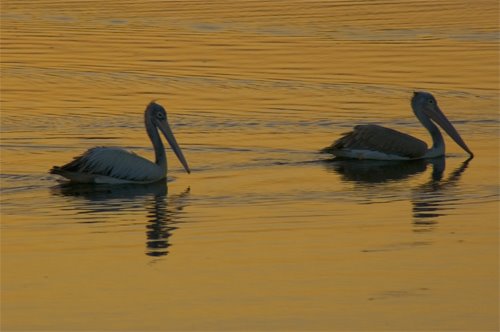
Most of the pictures on my website and on my blog here are from IISc. But I do go out you know. Well ok only very rarely and then with some coaxing...I'm lazy ok? I spent some time last winter going to this lake on the outskirts of Bangalore in a village called Medhalli. A few hundred Spot billed Pelicans were over-wintering there. Neato birds which by the way are endangered according to the Red list.


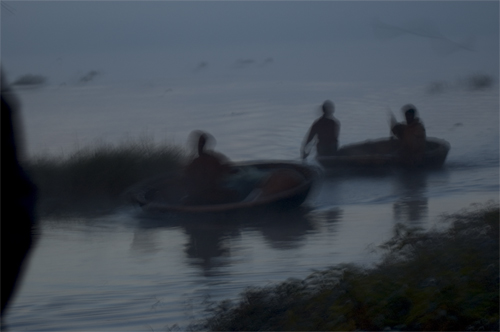
There were, off course, also fisherman on the same lake. And they didnt like the Pelicans since the birds ate up a lot of fish. They would try all kinds of tricks to keep the birds away, firework rockets, noise etc. With limited success. The birds stayed there all winter long, didnt fish too close to the banks and the fishing hut except early in the morning.

Here are some pictures, the first in the mid-afternoon, extremely contrasty and stopped down to get that nice blue of the water. The pictures of the fishermen in their coracles, the circular cane boat was shot before dawn.

And the Pelican picture next was shot after dawn early in the day when the light was overcast and soft. (which for some reason reminds me of this Stieglitz shot of his wife, the painter Georgia O'Keefe. I guess just the upraised 'arms'.)

The last one off course was at day's end, I love those warm colours mixing up with a blue mixed in into the ripples. The pelicans are there just for weight yeah? :)

Monday, August 21, 2006

Is it?

No I dont think so. And I havent moved to Canada either...But what it does mean is it's finally raining here.

Thursday, August 17, 2006

Backlit mongy

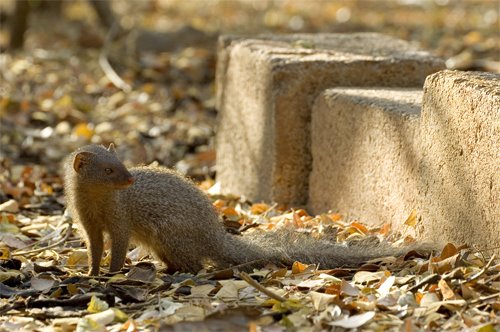
How did I miss this one? I fell in love with a family of mongooses and obsessed over them for almost 2 months. This is one of a few hundred shots. After I tore myself from them, apparently mommy had some more kids. The last they were seen, (unfortunately a long time ago), mom had 6(!) teeny ones in tow!

Wednesday, August 16, 2006

Spiderman

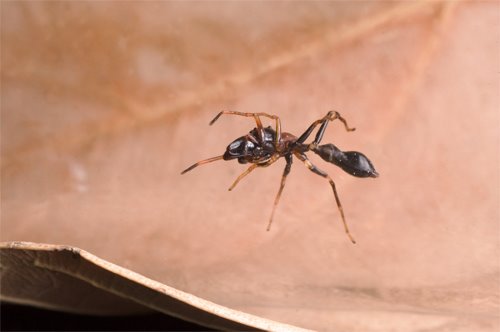
Here's a little visual puzzle to keep you busy. How did I take that picture. Hint: I'm a wicked witch!

And yes thats a spider, not an ant. Its an ant mimicking spider. I think that the ant below may be the model, I'm not sure though. They looked similar, but when I look closely the ant has an orange head the spidey a black one....so dunno.

Tuesday, August 15, 2006

Dying for someone else's cause?

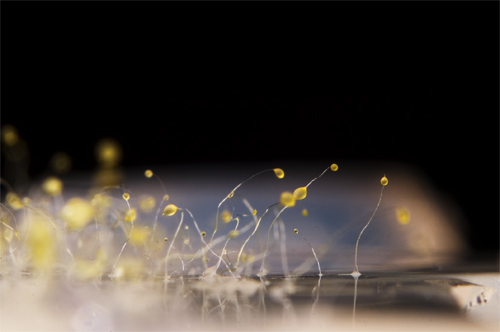
The one thing that every organism is expected to do is try and reproduce. When you see an organism give its life up so someone else might, it begs the question, why? Social animals, particularly the uber-social ones like bees and ants, have been the subject of the much research for this reason.

There is yet another organism that drawn attention for this reason. Soil myxamoebae are not too charismatic. The fruiting bodies (that you see in the pictures) that they form in one phase of their life-cycle look much like fungal sporangia. But they're quite different. A single fruiting body is made of many individual soil myxamoebae which have aggregated together. The stalk is made of dead amoebae and the 'fruit' on the top are living ones. The living ones will become spores and be dispersed and so the dead have died for anothers cause. A recent paper suggests that in some slime moulds there might be some interesting kin selection going on. Carl Zimmer the author of At the water's edges blogs here and has written a very nice post about them.

The other interesting angle to Dictyostelium discoidieum is that the individuals here are single celled organisms. And they come together to form multicellular super-organisms! Some believe that they may hold some of the clues to the evolution of multicellularity.

The pictures were taken in this lab which works on them in IISc.

Monday, August 14, 2006

Days end


The birds that roost in IISc come back to bed at the end of a day. Most of the birds that bless us at night are common mynas and crows. They forage elsewhere in the day and leave their post-digestion remains all over our road, vehicles and occasionally heads.

Friday, August 11, 2006

I think I will stick to natural history/biology from now on?

http://mama.indstate.edu/users/bones/WhyIHateWebLogs.html

Largely because I think he's right, despite the repeated use of the f-word.

Thursday, August 10, 2006

Animals

I've been reading about groups of animals recently and about socials animals and the distinctions that can be drawn between them. The definition is loose and while its clear that a family group does not make a social animal, its not clear really on other things. For instance are giant fruit bats roosting together social animals? I guess not, there isn't much 'cooperation' going on there....

Which isnt to say social animals are all cooperation and no conflict. Read this by a professor at my dept. which explores both aspects among social animals. Lee Dugatkin wrote another book, its a readable book even a good one. But his repetition of his religious beliefs in it and reasonably open admission of his political positions sorta bugged me. Theres no need for it to be in the book, or none that I could see. I believescience is incompatible with religion, I can see how people can do it and do do it, see how we often compartmentalize our lives. But I don't have to like it and don't think it entirely consistent.

But it did get me thinking about somethings. One thing that often slips my mind sometimes: that humans are social animals (I always wonder why people cant just keep to themselves!). To get back to the point: One of the most dismissed ideas in evolutionary biology is perhaps group selection. And yet, according to Dugatkin, there is some theoretical evidence that suggests under very very special conditions it might well be a significant driving force in the evolution of cooperation. One of the necessary (but not sufficient) conditions is great between group selection and low within group selection.

Thinking out loud here, I wonder if human groups are coming to this now. Not necessarily at an evolutionary time scale, but socially, we're so tribal. Look at all the fights between religious groups today, intense cooperation within groups and intense conflict between. Its a bit like ants biting the heads off each other if they come from different nests.