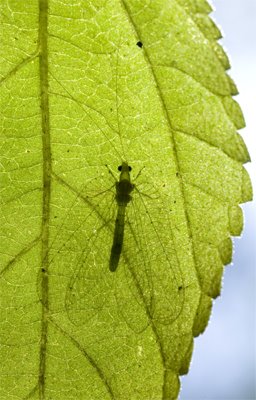
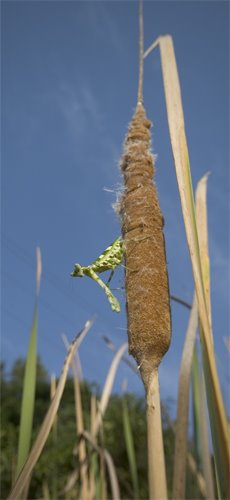
Showing posts with label insect. Show all posts

Wednesday, September 30, 2015

The abundant end of summer


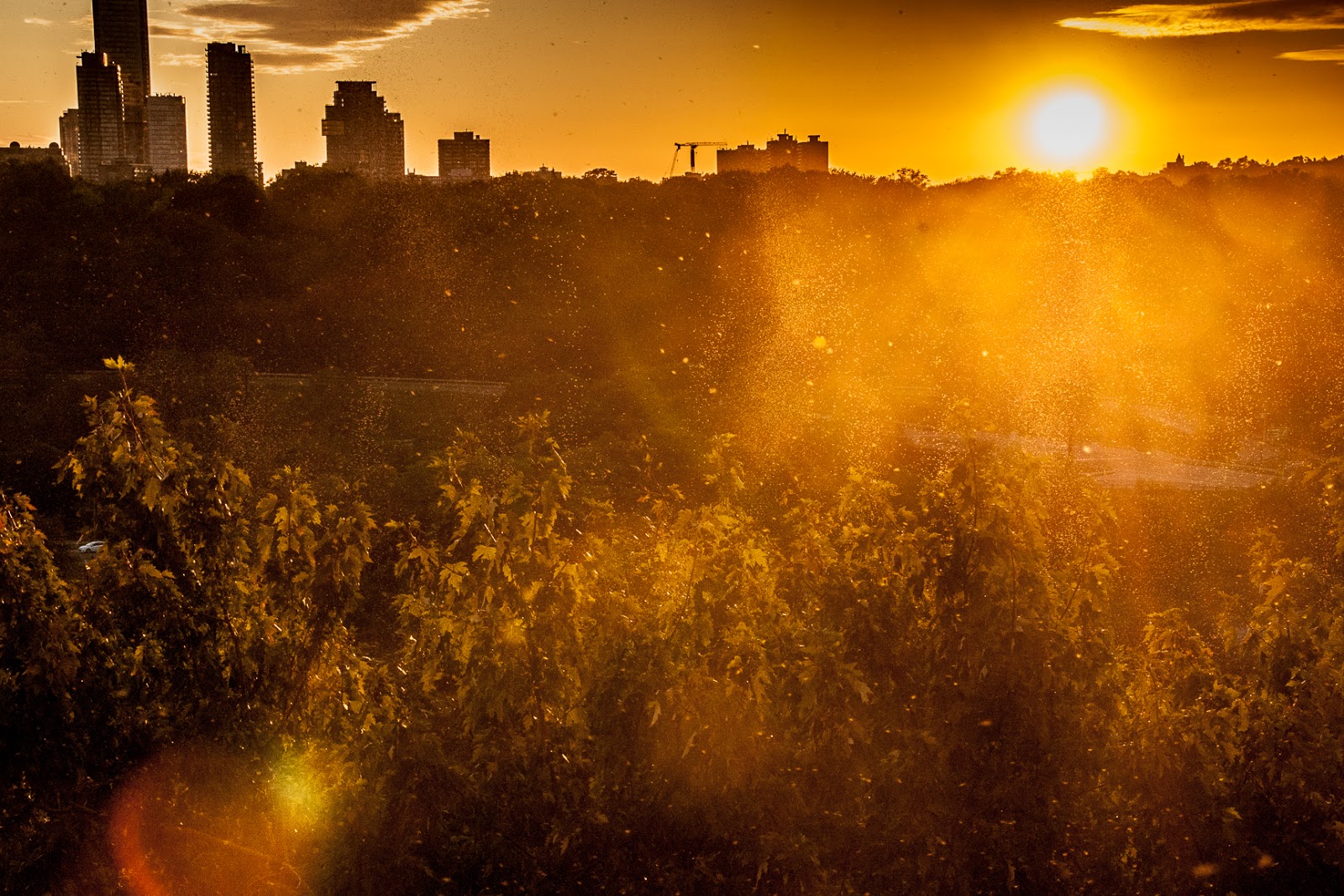
The Don valley parkway was closed this weekend. But it was very very busy in other ways. A few million midges had an end of summer party over it!

They had fireworks and everything!

It was quite the show. Summer got a grand send off.

Copyright © Natasha Mhatre If you're reading this without attribution to me anywhere other than at my blog Talking Pictures, its probably being plagiarized.

Monday, November 18, 2013

Potter wasp: National Wildlife Federation photo award winner


So, what if I don't photograph as much any more? My old photographs still win awards! This image which is in my book just took the first position in the Backyard habitats category in the National Wildlife Federation photo contest. The NWF is an American conservation organisation and they've been running this contest for (woah!) 43 years! Some of you may remember I've won before, in 2007, in the Habitats category.

Its not yet at WPY quality, which still is the gold standard, but its pretty good. I was told my image was selected from among 32k images; I'm pretty stoked. The quality of the contest entrants appears to be pretty high and getting better and better through the years. Slideshow below!

Baby steps, baby steps :)


Copyright © Natasha Mhatre If you're reading this without attribution to me anywhere other than at my blog Talking Pictures, its probably being plagiarized.

Saturday, February 25, 2012

Word beasts: an arms race


About 65 million years ago, is the accepted estimate for when bat echolocation first appeared on the scene. This was the beginning of a long and protracted arms race between the bat hunters, and the hunted, the insects. For a bat, the nocturnal insects of choice are the moths. Plentiful, and with large fat bodies which make them quite attractive. It helps that they are also easy to find; their wings are great reflectors of the ultrasonic frequencies that bats use to find them, flagging them up against the clutter in a bats sonic world.

Way back in evolutionary time, the moths responded to their new predators. In the beginning simply, by evading the bat attacks with crazy evasive diving maneuvers. Then, with more sophisticated methods; ears that were tuned with great precision and sensitivity to the bats very high pitched cries. The very echolocation cries that the bats used to find moths now immediately alerted their prospective prey to their presence.The moths could now dive and circle away well in advance of the swooping bat.

In response, the bats called more softly, they started whispering, and changing the pitch signatures of their calls. They tried their very best to make echolocation calls that the moths could not easily detect or discriminate the direction of. The moths kept up their part of the race too, the pressure not to become supper being quite high. They changed the shape of their wings so their main body would not be attacked and just the edges of their wings would be taken. Some even started making sounds of their own! Sounds that either jammed bat sonar or made them sound unappetising, the acoustic equivalent of very red berries. And in return, its seems that some bats have responded by finding prey by the sounds of the prey alone and silencing their echolocation calls. And so, on it goes. 

And on goes the research, starting with the work of Brock Fenton, way back in the late 70's, right up to today with many different groups still working on different aspects of the same behaviour and ecology! Including the work of fellow post-doc Holger Goerlitz, who helped me do this beast. If you want to know still more about this cool co-evolutionary arms race, you could do worse than read this lovely review (if you can get behind the paywall).

Copyright © Natasha Mhatre If you're reading this without attribution to me anywhere other than at my blog Talking Pictures, its probably being plagiarized.

Saturday, October 09, 2010

The bestiary discovers my roots: word beasts 3

It was obvious to me after the snakes that there had to be more. A bestiary was on its way. It was a matter of choosing who it would contain and what words they would be made of. I thought about the beasties I like, that I hadn’t already made word beasts of. With my photography, I’d developed obsessions with certain animals, with dragonflies, mushrooms, fireflies, lorises, mongooses, and so on. I decided to pick one of my perhaps much too photographed subjects. Someone had recently said to me that ‘Oecophylla rock!’, and they certainly had been one of my obsessions, so Oecophylla it would be. The red weaver ant and I have other history as well, so it made sense.
So what would my ant be made of? I figured it should be made of words about ants, and I figured the best ones would be the words of the hundreds upon hundreds of scientists who have worked on these ants. As social insects they get some of the best scientific press out there and have been fascinating (and sometimes discomfiting) to everyone from Darwin onwards. There would be no dearth of words on ants. So I collected a whole series of abstracts from scientific papers on ants and plugged them into wordle to make me some word sheets to work with.
It all seemed very poetic when I thought about how we as scientists make a conceptual ant in our minds, in scientific literature; an ant that has existence in our traffic alone, outside the real world of the ant itself. And how my ant was an ant reconstituted from our conceptual ant, the ant of scientific communication. This was the first result based on one of my photographs.

ant_only copy

It was a bit bland, needed something to stand on and a background so I provided one that looked as natural as possible; like vegetation bokeh in the background of a photograph.

ant flat copy

Now, I could have stopped there, but it somehow felt not enough. It was beautiful, to my eyes anyway. Every little piece of that ant is built from the word sheets wordle made. Including the lovely elbowed antennae. The work to make these is long, but it gives you what must be a taxonomist’s pleasure in dwelling over every detail of their anatomy. Yet not enough.
But when I thought of Escher and his ants, and made him a homage, it was finally enough.

ant_mobius white copy

Monday, September 17, 2007

Fireflies: the making of a shot

The path in Jubilee park by night
When I set out to do a fireflies in the landscape shot, it was quite late in the season. The erratic rain had got the worst of the population. And this meagre shot was all I could come up with. I waited while fireflies flitted around in the frame to let them show up against the dark background. And then later in the quite long exposure, I light-painted the trees in the back hoping that I wasn't washing out any of the firefly trails. I didn't mostly and it was fine, but the method was a little hit or miss. Besides, I did not like the background at all. The tree frame did not look as good as I wanted.

By day: windblown and bent tree in the Mainlawns in the monsoon
So I switched to another place where from a previous daytime shot, I knew I would love the background, and a day and night diptych appealed to me. So I took my tripod, and headed to my favourite windblown tree in the Mainlawns. By now, much of the season was over, and there were darn few fireflies to flit about in my frame. I wanted to make sure if one did oblige, that I would not loose it in the light-painting part of the shot. With the greater number of reflecting surfaces, the grass stalks up in the front of the image, the light would have to be balanced pretty closely. I thought wouldn't it help too much that the colours of the firefly flash and the grass are similar. Cars cruising along the side of the road that turned up around the horizon were not much help either (which was why I hadn't begun on this shot here). I wasn't sure I wanted to risk it, so I took a shot without exposing for the tree, just the dark and a firefly trail in it.

And then I shot for the tree separately, this time like before, waiting till the end of the exposure to light paint (you know, just in case). As it turned out, a firefly (which is actually a beetle) made a small sortie and I got a little trail to the right and another streak in the upper left. Not enough, but some satisfaction. And anyway, I had my backup plan, the earlier trail. All I had to was sandwich the two shots to get what I was after! Fireflies blinking love signals to each other in the lush monsoon enriched Mainlawns!

By night: windblown and bent tree in the Mainlawns in the monsoon


Friday, May 25, 2007

The law of unintended consequences: Lantana camara

Blue Tiger butterfly
A superficial glance at this post might lead you to think it's about butterflies. It is in an oblique fashion, but it's mostly about the plant they are all feeding on, Lantana camara. Lantana off course is an exotic, among ecologists a much reviled one.

The native range of this plant is in Central and South America and the Carribean. Lantana was probably introduced into India as far back as the 19th century. It has probably been introduced on multiple occasions as a ornamental or hedge plant. Since then it has nearly taken over the landscape in India, and is now found just about everywhere. It has the dubious honour of being listed as one among the top hundred worst invasive species in the world.


Common Rose butterfly
But it is not the damage that this weed does to local ecology, displacing native species, outcompeting them for resources that makes Lantana the poster-child for the "Law of unintended consequences". No that would be too simple, and many other contenders vie for that title. Whether it is the ill-fated attempt to get Indians to eat snails which now overrun the countryside eating their way through everything green or the cane toads in Australia. The world is rife with examples of human hubris gone awry.


Striped Tiger butterfly

Lantana carves a niche all its own though. It take things one step further. It not only makes itself ubiquitous it has also made itself indispensable. Well, perhaps that's going a bit far out on the line, but certainly key to many ecosystem processes. The key to this plant's success in novel habitats has been two-fold, it's wide tolerance for habitats and it's fruiting and flowering phenology.
Lantana camara flowers and hence fruits through out the year. This plant is a readily available, ubiquitous and massive source of nectar and fruits. With native plants out-competed and locally extinct, Lantana becomes the key source of nectar for many species of butterflies. It is similarly extremely important to several birds as a source of fruit available throughout the year.


Common Nawab
This double whammy means once established Lantana cannot be easily removed without serious ecosystem disruption. Some unpublished work has apparently suggested that several populations of Western Ghat species now rely on Lantana and a crash will be imminent if there is uncontrolled removal of this weed. This off course makes removal of this weed and subsequent restoration of local ecology difficult. Many parameters will have to be considered when attempting such an exercise.


Twany Coaster

Not that dealing with this invasive has been easy. Large seed loads mean that even burning and massive chopping are simply a set-back, not an eradication. This has been a hard hard weed to deal with incredible rebound capabilities. ATREE in Bangalore has been leading one of the more interesting efforts to deal with this menace.


Hawk moth (shot of the week!)
Lantana furniture! Made by tribals in the Male Madeshwara Hills in Karnataka, the project is an interesting mix of community involvement into conservation practices with payoffs for both. So all of you homesteaders who might want to buy furniture might want to give ATREE a call and check out their Lantana catalogue at their offices. You'd be doing your bit.

Monday, May 21, 2007

Wildlife photo secrets(4): the canopy

Small green barbet
Everyone who popped in and said hi on the previous post, thanks. And here's the next 'how-to' promised.

It's very seductive to think of grandiose names for the unknown. The canopy has been called, in scientific literature, the final frontier. Like the deep oceans and space, who also lay claim on that moniker, it's relatively unexplored and the first few forays into it have yielded a lot that is new. The oldest method of trying to get at animals in the canopy was fogging, immensely destructive and unjustifiable (not to mention useless) if you wanted to photograph living animals.

Pariah or Black kite

Then came the more (ahem!) sophisticated methods, the canopy cranes, bridges, rafts, hides and ropes. But do what we might, the human monkey has lost his ancestral ease among branches. All these tools take us up a bit and down again with little lateral leeway. And most of all they are available to very few people, usually researchers and then for a very little time.

So here's the good part, I've found that for urban/semi-urban wildlife photographers there are canopy cranes aplenty. They are called buildings. Many many rooftops, balconies, windows are actually very close to trees, the canopy within touching distance. These can be absolutely great to watch and photograph what usually goes on above eye level.

Blue rock pigeon

Look out for places where trees are close to a opening and then look out in them for animal activity. Whether it's nesting or nest building birds or birds and other animals that come in to feed when the tree fruits or flowers, or even birds that come in to roost or perch. Keep an eye out for anything you can convert into a photographic opportunity. The great thing about this little window of access is the ability to peer from a ready-made hide (the building) into a usually secret world. And off course, eye-level shots that are so much more attractive than those belly shots from below.

Rose ringed parakeet
But that's so much for the larger birds and mammals, what about the insects? The truth is most of those canopy access techniques I spoke about were actually devised in order to reach the smaller creatures, the arthropods. These cannot be shot merely by looking out over a closeby branch. The long lenses don't get you quite that kind of magnification and you can't really get much closer to the animals.


Long horned beetle
There is however a sort of indirect way that you can get at these animals. The photograph of the long horned beetle was got by this technique. In all of my time of hunting in the undergrowth I've never come across one of these wood-boring beetles. Yet they are all over my bathroom.


Praying mantis

The basic story is this, the lights in our bogs are left on overnight and they attract plenty of insects. (You can increase the efficacy of capture by using insect attracting UV lights). I live a floor off the ground and the canopy is close to our windows, sometimes peering in. The insects that are attracted to the lights here are often from the upper canopy and not the usual ground and undergrowth dwellers. All I do is go look everyday for something interesting. You'd be amazed at what you can get. The moths in the Nat Geo story were entirely from an urban backyard. (That story began in the bogs as well.)

Praying mantis
I keep a few vials and containers handy with me, catch what is interesting and take it to a habitat similar to what it must have come from and then shoot it. The insect goes free, I get some shots. It's pretty much win-win. Off course you're not going to get any big behavior shots this way. But you do get some spectacular animals and portraits are usually tractable with a little knowledge of insect behavior and some gentle coaxing. The insects in this post are all bog-insects!

So go try out your very own canopy access system!

Others in this series: Wildlife secrets parts 1, 2 and 3.

Monday, May 14, 2007

The animal is the environment


This insect, probably a homopteran, a heteropteran, has possibly the best camouflage trick in the world. It layers itself with the environment its in. Invisible under bits and pieces of detritus, wood, insect bodies, blending in completely with the background it can walk around with impunity.
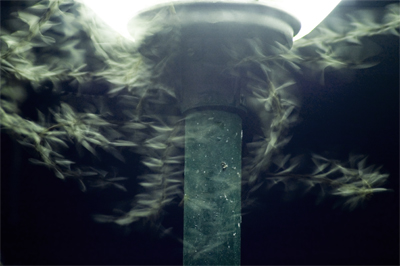
The only clues to its being alive are the facts that it moves and you can just about make out its exposed eyes and antennae.


To enlarge click on the image

Tuesday, May 08, 2007

Wildlife photo secrets(3): Getting close

Red wattled lapwing through grass
"If your pictures aren't good enough, you're not close enough." -Robert Capa. (Link to another site about Capa)Robert Capa, co-founder of Magnum, whose autobiography Slightly out of focus I recently read spent the best part of WWII getting close to the action. Its a hilarious read; he had to go through a lot to just stay in the war theatre with no passport and no press agency backing. He managed this feat of staying on in the war theater and close to the action with some amount of trepidation, at much risk to himself. He gained access mostly with a smile and with the lubrication on which he claims all armies move, alcohol (a strategy I haven't tried yet!)
Wildlife is both similar and different. Unlike people in wars, intent on their own purposes, wildlife notices your presence and reacts to it, usually by bolting. It's similar in that in some ways and sometimes it can be dangerous; for example with large carnivores, venomous snakes, etc. To get close, knowledge about your subject, its habits and capabilities, is paramount. I'll try and tell you what I have learnt. I'm still not as good as I would like and your own suggestions are very welcome.
Saw-scaled viper

Motion
Most wildlife: birds, insects, snakes, mammals, will react very quickly to motion. What this means is if you make sudden quick jerky
movements, you will be noticed and whatever you are shooting will run away. So learn to move slowly, smoothly. I have found this can require quite a bit of strength and agility, so develop those. And oodles of patience, the hardest muscle to build.

Even if you have been discovered, staying motionless afterwards makes animals forget about you and continue with their life after sometime.
Clothing
Camouflage clothing is artform, no really, look at what the military has been upto with it. It's useful, certainly you can't be wearing bright white or red clothes and expect to go unnoticed. Dress appropriately to the environment you expect to be in. Quiet shoes, comfortable shoes, discreet colours. If you can camo your equipment as well.
Silence
This is actually one of the reasons I dislike shooting with other people. Silence obviously keeps attention away from you, but it does a second thing. If you are quiet you'll hear other things, you'll find subjects to photograph or you'll notice that elephant sneaking up behind you. So leave the Ipod behind ok? Shootings safer and more productive that way.
Don't smell
No really. Particularly with mammals, strong odours, deodorant/perfume is a guaranteed way of not getting any shots. Leave your vanity behind.


Mongoose cub eating temple offerings
Sit still
The classic wildlife mode of shooting off course is to stay in one place and let animals come to you, hide photography. Get a hide, a camo net and stay. Hedge your chances of getting close to something by setting up a hide near a resource an animal needs (water, food, salt lick, mating grounds) or a place an animal inhabits (nest, den, etc). As I said knowledge is everything. Also oodles of patience, and all of the above. Some people also use bait, I haven't yet, although I have sort of used food others have set out.
StalkingThis is a different kind of photography altogether. All but sit still applies, well actually sit still, move, sit still, move, you get the idea? Use the terrain, hide behind things, plants, stones, etc. Stay out of direct line of eyesight of your quarry. Use zig-zag or round about approaches to it. When there isn't anything to hide behind squat on the ground and move bent down.

Keep your camera close to shoulder high while approaching. Its hard to do this undetected when you're close. (Any other ideas here?)

Remember your limits, never get too close, you'll loose your shot or worse get bitten, gored or killed.
When in doubt err on the side of caution.Familiarize
Believe it or not animals do get used to you. Wear the same or very similar clothes. Be unobtrusive and completely non-threatening. Keep returning to the place that your quarry is, it will maybe eventually accept you as part of the landscape. True of birds and mammals, insects and reptile, probably not.

Finally,
f5.6 and don't be there!
Camera traps are cool, and potentially expensive. So using remotes is also an option, stay close enough so you can trigger and guard your gear.

PS: the first 2 images link to my new Flickr gallery, following Strobist ideas on the service. Will see how it pans out.

Thursday, May 03, 2007

Cicadas


Have you been wondering what the noise was? It's these...They make sound with their abdomen's to attract mates.

Friday, December 15, 2006

Motion camouflage

These very cool flies, who can hover in a single spot and seem to defend aerial territories can do many other cool things. They remember their aerial spots using landmark cues and can return to almost exactly the same spot with accuracies in the mm range.

But by far the coolest thing (if they can do it, it has been proved yet) is motion camouflage. Male hoverflies apparently seem to sneak up on females during mating flights using this trick. The trick is to appear like a stationary object on the retina of the pursued while actually moving closer to it. The eyes of many insects are not quite resolved well enough and an object has to get very close to them before the size is perceivably larger and by the this time the pursuing insect is close enough to 'attack'. Now if the pursued animal was stationary this is straightforward. You just keep moving in a straight line towards it, not making any lateral movements with respect to it.

However if it is moving, you need to calculate where you ought to be in its field of vision and be there. The diagram above shows what this task would be like. (taken from Andersen and McOwan, (2003), they have a neat computational model of this behaviour) So you need to be able some kind of prediction about what its doing, apart from having the motor skills needed to compensate by moving as well. Hoverflies like this one appear to have all the requirements and apparently so do the coolest insect predators, the dragonflies.

Friday, December 08, 2006

Parental care

The phrase parental care often brings up images of some mammal cuddling its furry large eyed child to its bosom. It seems the epitome of bonding between parent and child and visual images abound, like Raghu Rai's the small hand within the large hand.

Yet some of the most amazing stories of parental care actually occur within the so called 'lower' organisms. I'll tell you about the most amazing one. The now extinct gastric brooding frog female swallows her externally fertilized eggs and they remain in her stomach for weeks before they are old enough to brave the world on their own. The frog does not eat the whole time!

Still, invertebrates? Really? Can somethings that 'low' actually show such 'evolved' behaviour. I think people underestimate insects. Even those that don't would perhaps find it hard to like cockroaches. Yet here is a description of cockroach brood care from an abstract of a technical paper.
" Cockroaches show the entire range of reproductive modes: oviparous, ovoviviparous, viviparous, and intermediate stages. Postparturition parental care is likewise diverse, ranging from species in which females remain with neonates for a few hours, to biparental care that lasts several years and includes feeding the offspring on bodily fluids in a nest. "
In fact these insects are called sub-social and these behaviours are believed to be precursors to the more admired eusociality observed in some other insects. Termites the well known superorganisms, of the social insect world are phylogenetically quite close to roaches. So look closer before turning away in disgust the next time!

(For people who wanted to know more tech stuff about the image, it was shot in the daytime in IISc, in Sept 2005. f32, 1/60 with a cheapie manual ring flash the vivitar 5000, Nikon D70 and MicroNikkor 105mm.)

Thursday, December 07, 2006

And its out!

My dad called up to say that the pictures were in the papers in Bombay. And I also received a 'formal' letter today. Since the news is out, I can announce it here as well!

This image of cockroach mum carrying her young nymphs on her back won the joint third position in the Sanctuary ABN AMRO Wildlife photographer of the year, 2006! (That's a mouthful!) The second picture of a sunbird hovering over flowers won a commendation in the same contest.
This is pretty cool, there are many very good wildlife photographers in India and well the competition is pretty stiff. So it's cool to win!

Also one of the nicest things about receiving this award was the very thoughtful letter I received announcing it. This isn't merely a you won note, theres a thoughtful analysis of why I won, which is unusual. None of the award letters/emails I've recieved before quite matched up. Off course, I didn't manage to go for the Living light awards in (which was a national competition organised by GNAPE and Ecotone, where I won first place in the seniors category) where apparently very nice things were said about the picture. (PS yes I AM bragging :) )

For those that don't already know, both these images and many other pictures are on my website (which I promise to spruce up at some point, bear with the poor graduate student). And if you want to use any image for any purposes, please talk to my stock agency, Visage images.

If you're from IISc and just want some prints drop me a line and we'll work something out.

Theres another post for those who want to know a bit more about this image and the biology.

Tuesday, November 07, 2006

Flashing bulbs


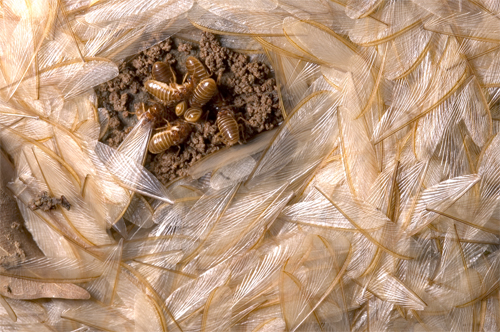
Its the time of year again when things get wet and all the creepy crawlies come out of the woodworks. The annual termite orgy has officially begun in IISc.
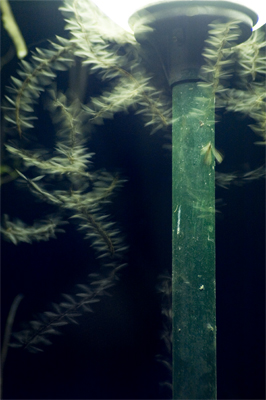
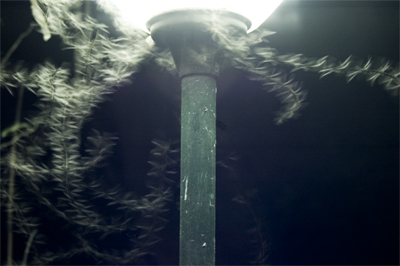
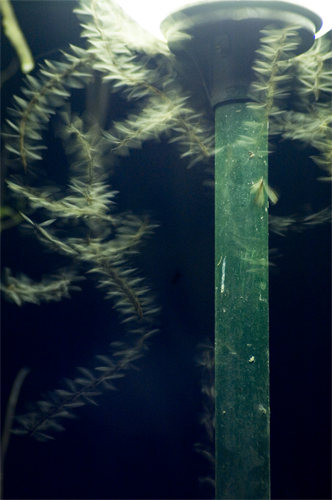
A few hundred winged insects came out the earth lost their wings and went in search of someone to loose their virginity to. The street lamps are abuzz , acting as lightning rods for sex-hungry insects eager to leave their genetic legacy behind. They fall to the ground loose their wings, follow each other doggedly, only to loose themselves in writhing masses of mating insects.

Fluorescent lamps flicker at a 100Hz in India. I was wondering whether that was why the termites flying around the lamp are stroboscopically stopped illuminated several times in their flight path in the first picture.

Monday, October 16, 2006

Apocalypse now

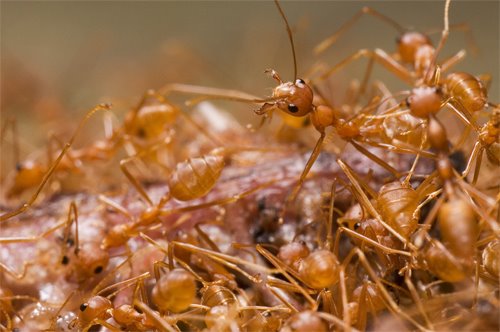
Wonder why this reminds me so much of that sometimes edited out scene. Oecophylla, the pirhanas of the insect kingdom.

Friday, September 08, 2006

Kamblipucchi

Or blanket worm is what the Kannadigas call one of these. I got one of these on my neck today and suffered some painful rashes as a result. I suppose that's the downside of so much diversity? All kinds of things can give you trouble?

The setae of some this caterpillar are called urticating hairs. Urticating refers to urticaria, a particular kind of allergic reaction. They are hollow and contain liquids secreted by trichogen cells at the base of the setae. The setae are meant to be defensive. The toxins they contain can apparently be quite diverse, ranging from protease like proteins, to histamine analogues, to anticoagulants. The result of having one of these dump its chemical load in your skin can range from rashes, to heart arrhythmia(!) to paralysis, seizures (!!) etc, depending on the species the caterpillar belonged to. There's a particular genus of south American saturnid moths called Lonomia that have caterpillars that are so bad they can kill you! The spines carry anticoagulants (same thing leeches use) that are very potent. They apparently have a fatality rate equivalent to rattlesnakes!!

Interestingly there are specific medical terms for these symptoms, Lepidopterism if it was a butterfly caterpillar, but moth caterpillars are usually worse, and that's called erucism.

On another completely other tangent, a long time ago Robert May, yes 'the' Robert May stopped by at our lab when he was visiting IISc. He told me about stridulating caterpillars when I was showing him my crickets. He didn't seem to know however why they do this. Some ants and caters are known to communicate, using vibration though. Maybe he was talking about these?

Wednesday, September 06, 2006

Yellow Pansies/Pansys?

Anyway, dont know whats going on here. Does anyone else?

Both butterflies look exactly the same on the inner wings. Don't think these are sexually dimorphic butterflies. The one thats flying did this for several minutes, occasionally landed next to the sitting butterfly. The flight was more 'fluttery' than usual. When the flying butterfly landed, it's head was usually pointed at the end of the abdomen of the other butterfly but I couldnt make out what was happening. I guess this is butterfly courtship.

But it didnt end in mating, so I amnt sure. I've heard of territoriality in butterflies, but the sitting butterfly didn't run, so I guess not.

Anyone surer than me?

Thursday, August 31, 2006

Making waves

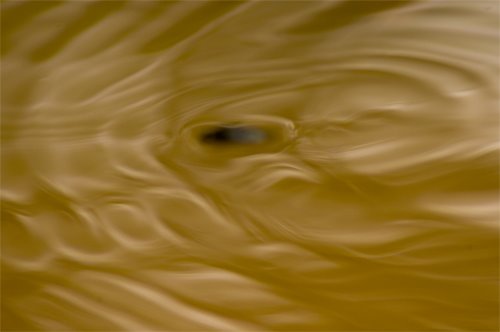
Ever noticed these black beetles in ponds when it rains, they seem to be calm and then suddenly as you approach them they go crazy. Skittering about swimming fast like madcaps? That behaviour has earned them the name Whirly-gig beetles.

They're aqautic for their entire life, eggs are laid on submerged plants. Larvae live underwater and predate on mosquito larvae making them great pest control agents. The adults are also predaceous and usually swim on the surface When required they can dive like many aquatic insects with air bubbles trapped between wings for respiration. What they seem to be most studied for is aggregation, signalling and predator response. They release chemicals when disturbed which alert the others in an aggregation.

The coolest thing about them in my opinion however is that they're eyes are split. The lower half of both eyes are adapted for underwater vision and the upper half for vision in the air!

Some of those fluid mech / engineering types have also done some work on their swimming patterns and the waves they generate. So maybe the above image is interesting to them?

Sunday, August 27, 2006

Insect ears

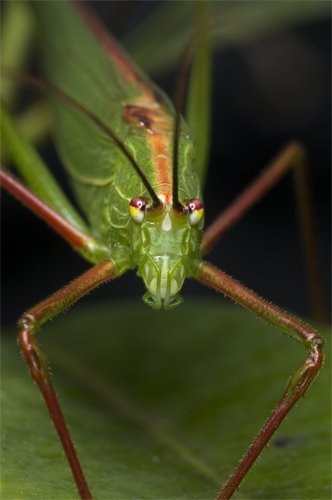
I work on crickets and when i tell people about one of the things that always gets them is that crickets have ears on their legs. Look just under the leg joint in the bushcricket picture, can you see that slightly inflated region? Thats the ear (well sort of, it leads to the ear, thats a tympanal slit).

Insects have ears, literally, all over. They've evolved independantly among insects almost a dozen times over. They're on legs, abdomens, and they're on wings! In the neuropterans, ie lacewings, like the one in the picture, the ears are on the wings!


Well, mosquitoes and bees hear with their antennae. Actually, if I have it right, they hear in the near-field, so they detect particle motion not pressure, unlike the other ears I'm talking about. The resolution those systems manage is so great that they apparently can pick up even motion at even angstrom scales! Thats pretty impressive, and possibly almost on the absolute borderline of physical possibility.

The other weird ear in the insect world belongs to mantises, they have a single ear. Now if you remember your basic physics, sound is scalar and does not have directional cues. So to tell where sound comes from animals have evolved two ears and several physical and computational tricks. But this hinges on having more than a single ear, which the mantises dont have. Why is that?

The thing about ears in insects is that they seem to be easy to build. Ingredient one : you need an air space which insects have everywhere because of their tracheal breathing tubes.

Ingredient two and three: receptors and neurons. First you need something to sense the vibrations of the tympanic membrane you strung across this empty space. Then some neurons to carry these signals away to the 'brain'.

And those are everywhere in insects as well. See they (actually all of us) have these receptors called proprioceptors that detect mechanical stimuli. They're meant largely to figure out things like ok, legs bending now, and now the wings out, theres x amount of resistance on leg 2 and so on. To provide feedback to the brain on how well its commands to the motor system are being carried out. Now these have neurons connecting them up to some ganglion and then to a higher 'brain'. So if you can rearrange your proprioceptors to detect tympanal vibrations and your neurons to carry the signals, voila, you have a ear!

Actually why spend all that energy on making a ear though? Predator avoidance comes the pat reply, particularly, BATS!

You know this cool thing I read about this proprioception stuff, in one of the first insect walking robots they made, they didnt think about the interaction between the robot and the surface it was to walk on. And there was no feedback of the kind proprioceptors provide. If memory serves, that robot tore itself apart as it walked!