Showing posts with label photography. Show all posts

Monday, November 18, 2013

Potter wasp: National Wildlife Federation photo award winner


So, what if I don't photograph as much any more? My old photographs still win awards! This image which is in my book just took the first position in the Backyard habitats category in the National Wildlife Federation photo contest. The NWF is an American conservation organisation and they've been running this contest for (woah!) 43 years! Some of you may remember I've won before, in 2007, in the Habitats category.

Its not yet at WPY quality, which still is the gold standard, but its pretty good. I was told my image was selected from among 32k images; I'm pretty stoked. The quality of the contest entrants appears to be pretty high and getting better and better through the years. Slideshow below!

Baby steps, baby steps :)


Copyright © Natasha Mhatre If you're reading this without attribution to me anywhere other than at my blog Talking Pictures, its probably being plagiarized.

Monday, April 22, 2013

The beautiful killers


They look beautiful, don't they? But there are a few of you that know who they are. And why this post is the only appropriate one to write after the previous one. These are growths of fungus on one of the front elements of my 'long' lens. When I first came to Bristol, I didn't bring that lens with me. Instead I chose to leave it in a bag. A bag that simply sat somewhere in a cupboard in Bangalore while I was away for a few months. Somewhere in that time I think the lens caught fungus. Once it's started, its an inexorable march forward.

If the front element makes you want to weep, have a look at what one of the inner ones looks like. Not pretty eh? This lens is done. Its lived out its life. It made me a book and thats pretty good value, I think for what it was. But now it's done.


But, I had to take a long lens when I went to Africa. There was no way I could go without one. So I had to think about whether to take this lens or buy or rent another one. Somehow between being lazy, stingy and generally uncertain. I packed this lens as was and went. You've seen some of the pictures.

Of those, this lens made this image of a Jackal, this seal image, the rhino images, the drinking bull elephant and then some. (But it also made the ostrich image, which is at a distance and quite soft).

In the end, I think it was a good idea to take it because the image above shows what I did to it. It was attached to my camera in my backpack, which was sitting on the front seat of our vehicle. I had unzipped the bag and forgotten that I had. At one of our rest-stops, I lifted the bag up and hoisted it to my shoulder and swung around to walk away from the vehicle. The flap flapped open, predictably, and the lens and camera went flying out and landed on the ground with a thud. Maybe three-four feet away. My heart skipped a beat.

Suffice to say, in the end, I discovered this 'dent' was the only outcome of my little disaster. The camera survived and so did the lens. They both still work. As imperfectly or perfectly as before. 'How?', you ask. I don't know. They're built like tanks and I am grateful for it. I would've been very disappointed if I'd lost either at that stage in the trip. And as grateful that I hadn't done it to another more expensive lens, whether bought or rented.


That lens is an old Sigma 170-500 mm f/5-6.3. It was never the best or even close to the best lenses on the market. It's AF has always been slow, still is. Its only f5 at its brightest and thats not bright at all. Its bokeh is far from great and it has always been a bit rubbish at far away subjects. But it was cheap, suited my grad student pocket and was light enough for the lightweight that I am to hand-hold. It served me well, my book wouldn't have been possible without it. There were many situations, I'd even say enough situations where it was more than adequate for the job. If you don't believe me, I hope you will be convinced by the photo at the end. It was taken at the flood lit water hole at Okaukuejo waterhole with the other rhino photos at night.

I'm struggling with what now though: whether I want another one, whether I shoot enough to even warrant buying one. And if I do, which one? They are all so expensive and so heavy! Damn, this is a hard decision...Buying the Sigma in the first place was so much of an easier decision!

Feel free to chime in if you have an opinion. Or even just to send me your commiserations. You see I had the best holiday ever and I'm still moaning. There's no hope for me!


Copyright © Natasha Mhatre If you're reading this without attribution to me anywhere other than at my blog Talking Pictures, its probably being plagiarized.

Wednesday, January 23, 2008

Flame of the forest

Repost
I'm terribly sorry I haven't really been posting much, there's been a lot to do. With some luck we should be back on schedule shortly.
These trees are blooming all over right now, so I thought it was a good time to resurrect the post.

Flame of the forest

This tree deserves it's name in more ways than one. The flowers look like flames individually. A tree in flower does really look like it's on fire. And every bird within a mile's radius is in love with it. And off course squirrels and insects.

Two days of waiting paid off! Ta dah here they go. The last one, a Spangled drongo, is a western ghats species. If you look at its distribution in the GI and I its painted along the western ghats. Well, it's here and it picked this tree to feast upon.

Flame of the forest
You know sometimes I feel like one of those sad homeless people you see on the streets, clutching at their treasures. Things no one else would find even remotely interesting. I'll be raving about some bird no ones even ever heard of before. Well, fortunately there are a few people who are a bit like that in CES and I'm not considered stark raving, but only moderately mad. Well, the slightly deranged vocabulary that apparently accompanies this enterprise does make up!

Tuesday, December 11, 2007

Lighting for macro

A paper wasp (Vespa sp) taking off from the nest
One of the things that I find annoying about macro work, mine mostly, work that has been done with flash is the bland, black, unlit backgrounds. These give you darn little feel for the environment the animal is in. They happen largely because all macro work is this fine compromise between magnification, depth of field (DOF), available light and flash light.

When you increase magnfication, DOF falls, it's the law. If you want high DOF, which you usually do, that means you've got to nuke the subject with light. When you're adding huge amounts of light using a flash and meter for the flash, it usually is over-powers ambient light. Its so much brighter than ambient light that ambient makes very little contribution to the final image. Hence the black backgrounds. (Strobist on balancing ambient light.)


A hornet leaves the nest to forage
There are off course many ways to deal with this. You can compromise on DOF, use selective focus instead of trying to keep everything in. That allows you to lower your aperture, pour in less light and be closer to the metering you would get from ambient light.

The second is simply to find areas of high ambient light. Not necessarily on your subject but on the background. On some distant object, for instance, which then becomes this nice bright source of buttery background bokeh as in the hornet images in the post. The bright patches in the background come from a tree which the evening light was hitting. It was at least 4 feet away from the nest, completely out of focus and created this lovely warm coloured bokeh. You can also use the sky in this manner, it's almost always a very bright source.

Inbound and outbound traffic

The third is to actually light the background yourself! I personally have gotten so stuck with the idea of lighting my subject that I never think of backgrounds at all. Off course, in my defense most of my earlier images used a single flash which could only be pointed in one direction. So, it was a bit hard to light two things at the same time, now with two I can do more if I want to.

The other good reason for lighting the background, is to be able to separate the subject from the background. When the main subject is lit directionally, it may have parts of it in shadow. This part will be the same near black shade as the background. It's a good idea not to have this so you can tell the shape and form of the subject itself, to separate it so to speak.

Two ways that immediately come to mind to do this, brighten the background as before or rim /back light the subject. The hornet pictures actually have both tricks in them. The back light is provided by a fully zoomed flash, you can even snoot it to prevent spill, the trick is to get the light behind the subject just lighting the edges.

A few more technical details on the hornets in my flickr photostream.

Wednesday, November 21, 2007

The hedgehog, the fox and every modern man's pox

Apologies to Stephen Jay Gould for snicking the title of his excellent book

This day was wonderful for so many reasons, can I have it back please?
Some of you know that I am a graduate student right? I work in the field of animal behaviour now, but my training has been much broader than that and I've studied and done work in several other unrelated fields in biology. I'm not a polymath, but I do have a passing familiarity with a fair bit of biology.

I sat to down to tea with a friend today at the mess and I found a paper lying next to the window. Here's the title of the paper 'A simple reference state makes a significant improvement in near-native selections from structurally refined docking decoys.'

Mallika Sarabai
I had a WTF moment, then V pointed out the name of the journal, it was 'Proteins'. We made a game of it and tried to piece together what the paper might be about, based just on the title. The best we could make of it was a very very hazy idea. To think I've even worked in computational protein biology, albeit a long time ago. Worlds move on, jargon grows, knowledge becomes extremely specialized and inaccessible even to people just outside your sub-specialty. In Frazer's view the evolution of human societies went from magic to religion to science and it seems sometimes to have come full circle again and back to magic. Much of todays science is so technical and narrow that its much beyond the reach of so many, it might as well be magic.

Throwball player
What does this have to do with photography? A bit, I will come to it soon, I promise. Before that let me tell you about the hedgehog and the fox. Many of you might have heard of the adage, "The fox knows many things, but the hedgehog knows one big thing". When hunted, foxes apparently try many different tactics to get away from their pursuers. All hedgehogs everywhere, off course, do one single thing, they curl up into a spiny inaccessible ball.

Isaiah Berlin and then others have used the fox and hedgehog analogy to divide writers, scientists, thinkers, etc into these two categories. Those who are fox-like and have multiple approaches, or do many different kinds of things, in whose life multiplicity is key. And those who are hedgehog-like, who dig deep into a single thing or idea and thoroughly study its every aspect. You're either a hedgehog, singular and focused; or a fox, multiple and hence, by implication, superficial. Depth or variety, those seem to be the choices offered.

Here is the modern man's pox. That it has come to this, a choice.

If you want to make the top of the game, given the way it's set up, usually the foxy choice is hard to make. In any field. To reach the top of the game, I might add, not your game. It's also true of photography. Nearly everyone at the very top of the field has a sub-specialisation, they inhabit a very special niche. Portrait photographers, children's portrait photographers, wedding photographers, bird photographers, industrial photographers, foundry parts photographer, automotive parts photographer what have you. Sometimes its not even a reaching the top affair, its a survival affair. I have occasionally felt the desire to go pro. The narrowness sits uneasily with me however. I can't see too many ways around it however.

When I think about where I come to photography from, something in me rebels against this. I am, as it stands, a scientist. I have a little creative instinct somewhere in me, it likes to express itself this way. I have things other than science that I enjoy, that I am passionate about. The reason I shoot is to make myself multiple, multi-dimensional.

The truth be told I am a pretty narrow photographer already. Look at my portfolio. I'm a nature photographer, in fact there are some who think of me as a macro photographer (how I squirm). Thats my hedgehog nature. And its what makes me good (sometimes, even if I say it myself). Nonetheless, every time I find myself stuck, hitting plateaus, in the way I see or shoot, I do one of the following two things. I pack my bag with a single wide lens; a wide right now, because that is what I shoot least. Or I shoot people, something I've always been uneasy with.

Looking at people looking at the image not the thing
Shooting people teaches me a lot about the theater within an image. Shooting wide teaches me a lot about the construction and configuration of elements within images. Both of these types of shooting are unforgiving in their own way, images fail easily. To make them well, I must learn certain basic things, about patience, form, position, timing, etc; these I can apply everywhere. I find growth in any direction, even away from my primary direction, is very satisfying. There's a part of me that knows it will pay off eventually. Every foxy thing I do, I can bring to bear on my hedgehog concerns. I think the Wiki version of the hedgehog and the fox idea codes it a bit wrongly. It's not so much to see the world through a single lens, but to make many lenses bear on the same world.

Monday, November 12, 2007

Returning

Mushroom cluster 8th Nov (no 2 in linked post)
Just because you got a good picture of something does not mean it's over. That the thing is done, wrap up your cameras and close the door behind you. There is almost always more to come. Learn to have patience, learn the rewards of return.

Things, particularly living things change, they evolve, they like people display sides of themselves that you've never seen before. You cannot anticipate everything, don't try to. Even the inanimate things, light moves over a familiar surface, moss climbs over it in the rain. Everything changes and you can keep looking and keep learning. Try not to be so wrapped up in shooting that you forget to see.


The same cluster 10th Nov

Many people visit the same places and yet their photographs are not the same. What sets the good apart from the also-rans is the ability to see and break tired ways of seeing, the patience with a subject that cracks it wide open. The good shot you wanted and got in the bag is often the one that has more to do with you and your head than with the subject at hand. Sometimes you need to stare at something stupidly for a while before it begins to speak to you. (It helps an awful lot if its an immobile thing.) Don't be easily satisfied.

More from 10th Nov

Monday, November 05, 2007

Chris Jordan: Conspicuous consumption

The number of plastic bags used in the US in 5 seconds (60x72 ")
How many cellphone models have you had? How many plastic bottles of Coke/Pepsi/etc did you drink and dispose over the last week? How many times did you stop at the coffee kiosk and do you remember where you put your coffee cup? How many print-outs did you take? Were they one-sided? Did you leave the tap running while you brushed your teeth? How many computers have you owned and what happened to the ones you no longer use? Did you go shopping, did you accept plastic bags?


Actual size detail of previous picture
Chris Jordan is an American photographer who's concern is consumption and the scale of it. It seems like a small thing when you see your own waste, but most of us fail to account for the fact that there are hundreds of thousands of people who lead the same lifestyles as us. We fail to account for the size of the problem when do this. Large numbers numb human beings, we cannot process numbers like millions and billions, they are no understandable scale with respect to the ten fingers on our hand. Often to understand them we need the analogy of physical scale. Here is a commonly repeated physical analogy for large time scales:

"Man has been here 32,000 years. That it took a hundred million years to prepare the world for him is proof that that is what it was done for. I suppose it is. I dunno. If the Eiffel tower were now representing the world's age, the skin of paint on the pinnacle-knob at its summit would represent man's share of that age; & anybody would perceive that that skin was what the tower was built for. I reckon they would. I dunno. - Mark Twain"

Chris Jordan's work does exactly this, you see in space what we consume in time and when you consider how much space we occupy, obliterate in how little time hopefully you pause to think. Here is part of his statement, I find it intriguing that he also perceives and worries about the damage to our spirits from this frenzy of consumption:

"The pervasiveness of our consumerism holds a seductive kind of mob mentality. Collectively we are committing a vast and unsustainable act of taking, but we each are anonymous and no one is in charge or accountable for the consequences. I fear that in this process we are doing irreparable harm to our planet and to our individual spirits.- Chris Jordan"


Fifteen minutes of Energizer battery production. Size scaled as if the batteries were depicted at true size.

We, as a country, probably do not yet consume quite as much as the US. But I reckon that in some pockets of Indian society, our consumption levels are as high. With the kind of economic growth that gets much touted in the MSM, some of us are definitely getting there. It is any rate something that many aspire to and that all media now pushes us to aspire to. We need to think about what we're doing. Every time we buy, every time we discard. Can we do without this? Can I use this some more? Do I really need that new shiny thing? Because one day we might be choking on growth.

Recommended viewing: Running the numbers; Intolerable beauty

Wednesday, October 17, 2007

More eye-candy or the universe of little things that make me happy

Found photo


Sun on duckweed on pond


Loten's sunbird hovering


Something like fall in India


Brown Shrike


Bay-backed Shrike

Monday, September 17, 2007

Fireflies: the making of a shot

The path in Jubilee park by night
When I set out to do a fireflies in the landscape shot, it was quite late in the season. The erratic rain had got the worst of the population. And this meagre shot was all I could come up with. I waited while fireflies flitted around in the frame to let them show up against the dark background. And then later in the quite long exposure, I light-painted the trees in the back hoping that I wasn't washing out any of the firefly trails. I didn't mostly and it was fine, but the method was a little hit or miss. Besides, I did not like the background at all. The tree frame did not look as good as I wanted.

By day: windblown and bent tree in the Mainlawns in the monsoon
So I switched to another place where from a previous daytime shot, I knew I would love the background, and a day and night diptych appealed to me. So I took my tripod, and headed to my favourite windblown tree in the Mainlawns. By now, much of the season was over, and there were darn few fireflies to flit about in my frame. I wanted to make sure if one did oblige, that I would not loose it in the light-painting part of the shot. With the greater number of reflecting surfaces, the grass stalks up in the front of the image, the light would have to be balanced pretty closely. I thought wouldn't it help too much that the colours of the firefly flash and the grass are similar. Cars cruising along the side of the road that turned up around the horizon were not much help either (which was why I hadn't begun on this shot here). I wasn't sure I wanted to risk it, so I took a shot without exposing for the tree, just the dark and a firefly trail in it.

And then I shot for the tree separately, this time like before, waiting till the end of the exposure to light paint (you know, just in case). As it turned out, a firefly (which is actually a beetle) made a small sortie and I got a little trail to the right and another streak in the upper left. Not enough, but some satisfaction. And anyway, I had my backup plan, the earlier trail. All I had to was sandwich the two shots to get what I was after! Fireflies blinking love signals to each other in the lush monsoon enriched Mainlawns!

By night: windblown and bent tree in the Mainlawns in the monsoon


Thursday, August 23, 2007

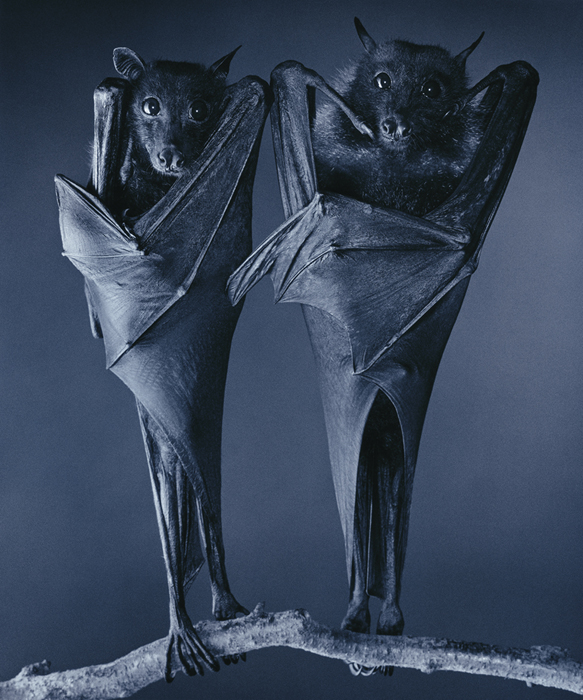
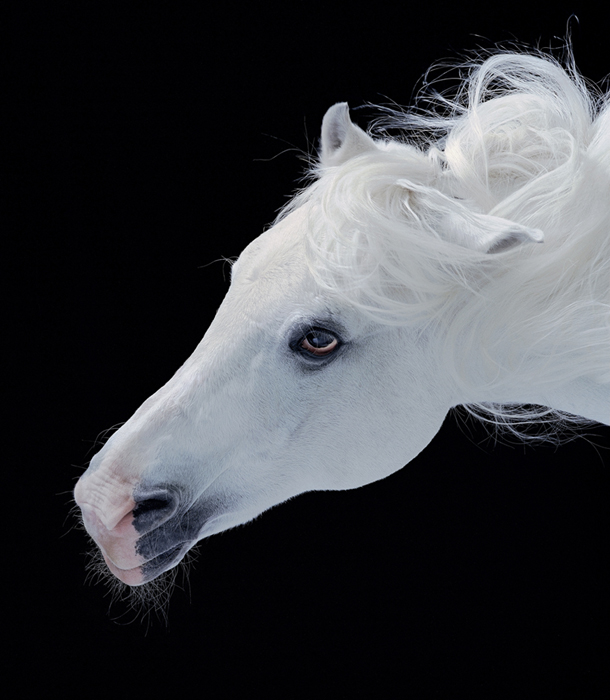
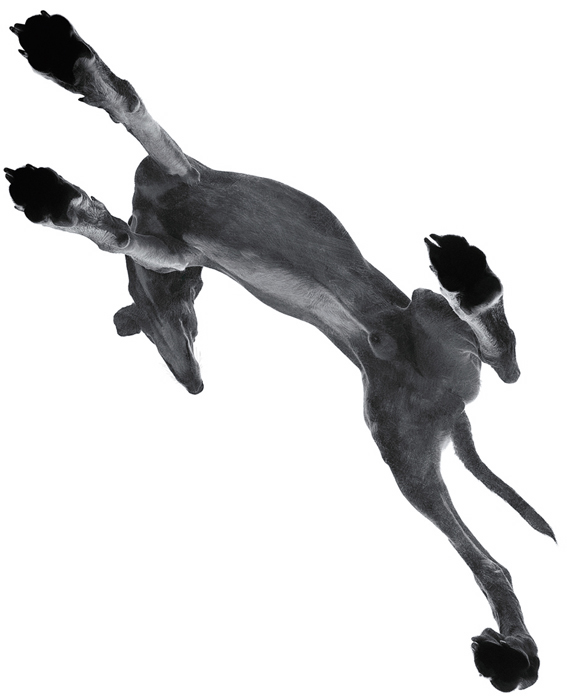
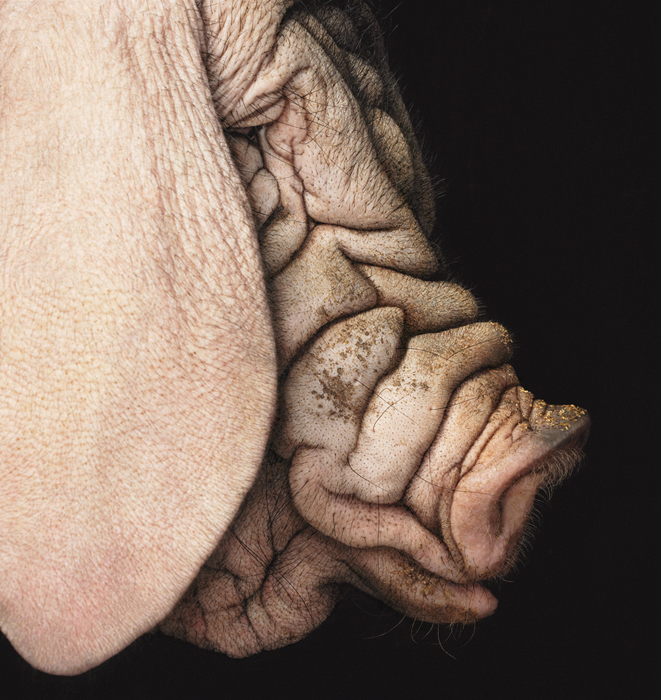
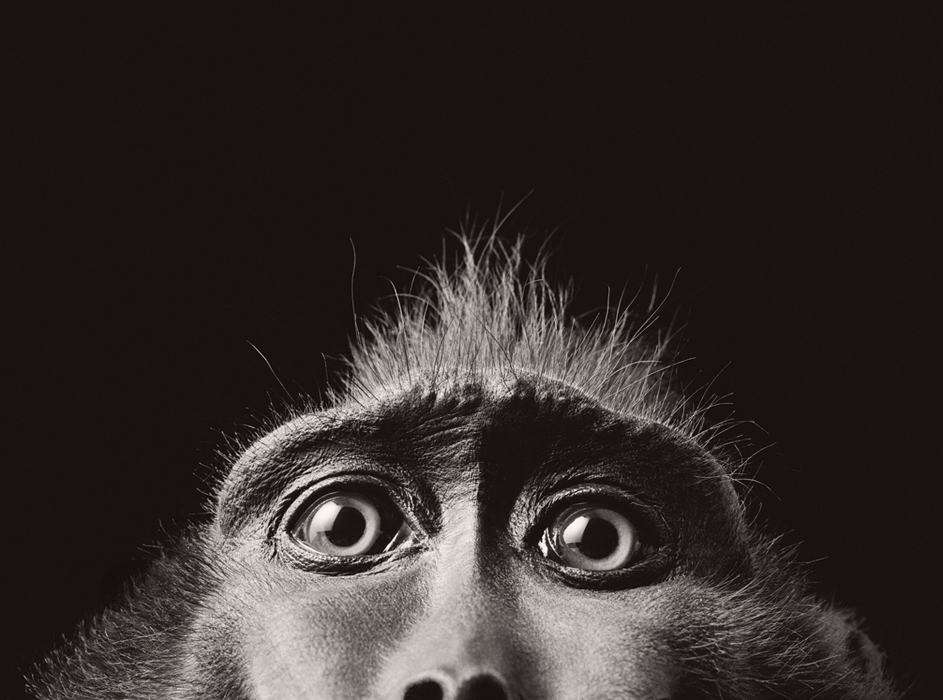
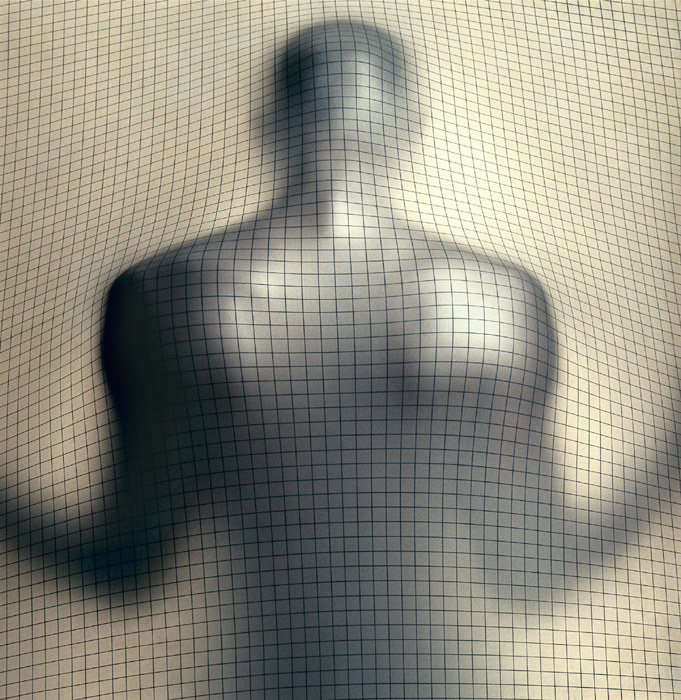
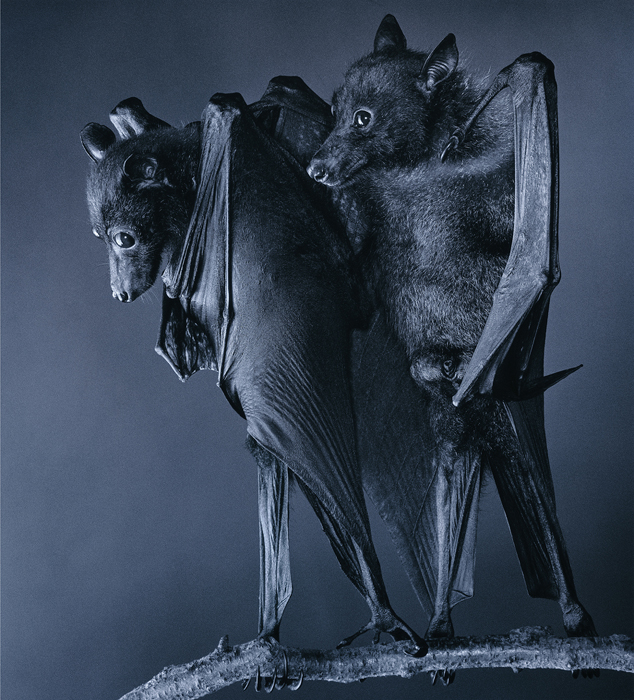
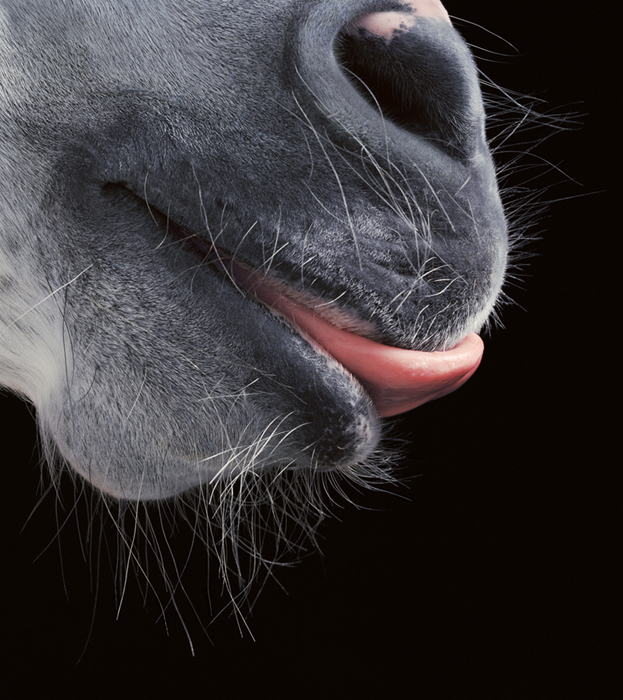
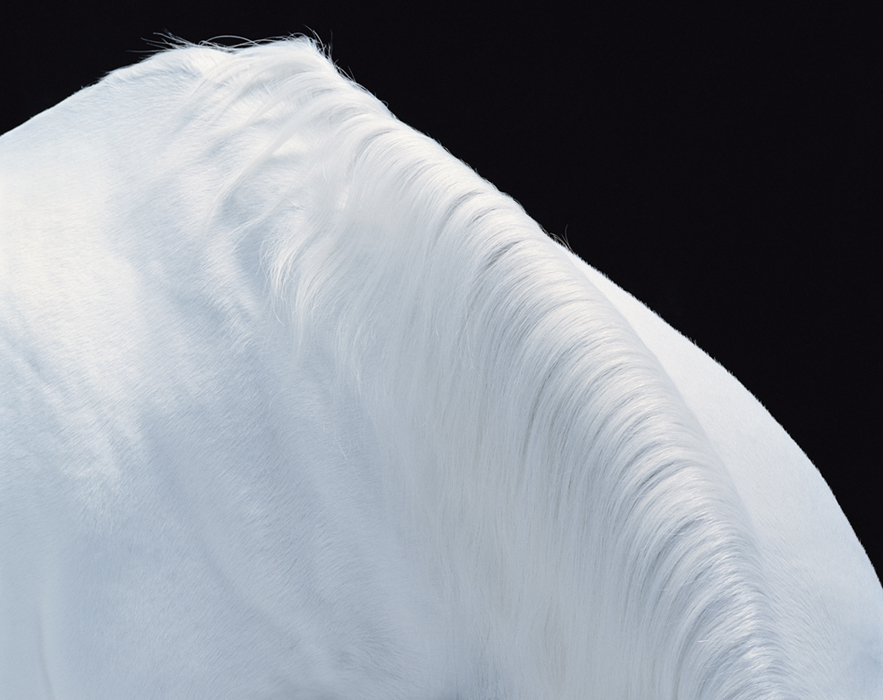
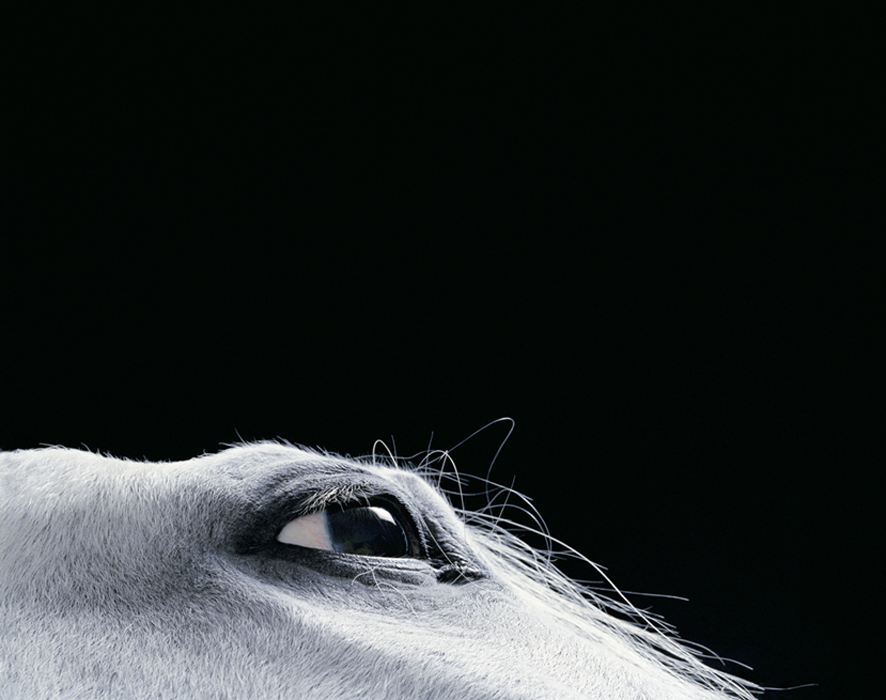
Tim Flach: animal photographer

All images in this post are copyright Tim Flach used under the fair use clause for criticism)


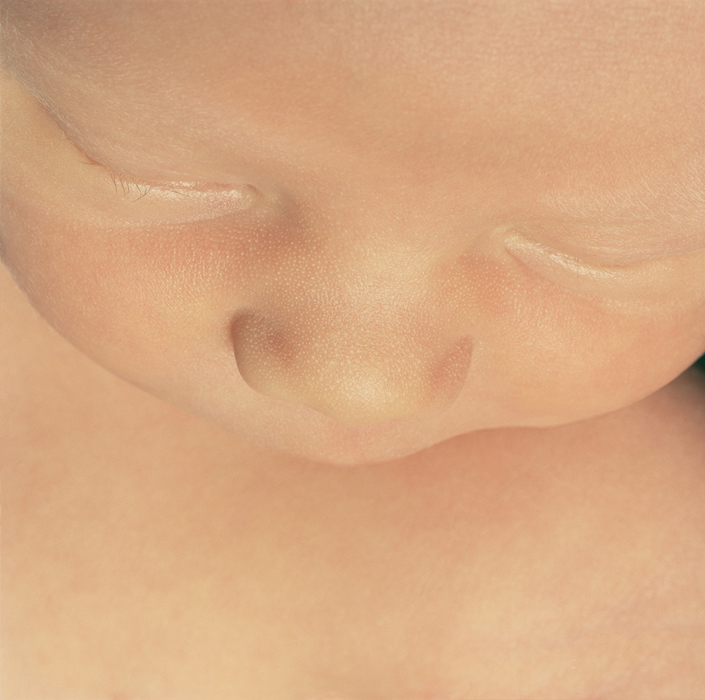
Tim Flach according to a Professional Photographer article is obviously an animal photographer. Many of his images do have animals in them. And they treat animals quite sensitively. He has a few series which he has worked on extensively. Series on animals that are not the first lovable wooly warm-blooded mammals that appear in our minds. Or even the glamorous charismatic mega-fauna, not the predators and nor their fecund prey. His work has been on humble bats, the domesticated horse and dog, pigs and the occasional monkey. (And maybe some mega-fauna as well, sometimes humans.)

He seems to be one of the few nature /animal/wildlife photographers that are willing to talk about their work and the thoughts that precede the images. (Maybe they all do and I haven't looked.) He attempts many things in his ambiguous animal images: to suggest our kinship through the similarities in gesture to alien seeming creatures like bats. He wants to challenge our expectations of reality by placing animals outside their context. He also places a great deal of importance on the visual structure of his images and his photographs are as or more driven by design principles, than they are by their subjects. For this he tends to use exceptionally controlled environments in which he photographs these animals. The other reason for this is perhaps an obsession with detail evident in his shots. Design and detail dominate his visual style.

Which is something I enjoy and something that bothers me. I love carefully constructed images, images with attention to detail, to form, to space, to that delicate balance between what is said and implied, shown and hidden. I think there's even a huge amount of careful thought about the emotional content in his images. All of these are indispensable qualities for a 'great' photograph.

Yet there is something missing, and that je ne sais quoi is in my opinion, a sense of spontaneity. The huge photographic machine of control boxes essentially free animals into a photographer's visual cage. The only spontaneity here is in the reactions of the animals and even those seems postured, contrived. This ends up undermining Flach's desire that we examine the animals in relation to ourselves. We examine his designs, his constructions, with relation to ourselves. The animals are not really in the frame at all. Flach manages to make animals human artifacts. Which I like, sometimes, but leads me to wonder about his credentials as an animal photographer. Is there such a thing as an animal tabletop/studio photographer?

(To be entirely fair, they called him an animal specialist, which could be interpreted differently but since Sara introduced him to me as a animal photographer, I will take as such.)


Another Tim Flach page for flash deprived IIScians.

Other Posts on unusual 'wildlife' photographers: Nick Nichols, Rosamund Purcell

Monday, July 02, 2007

Wildlife photo secrets(5): Which one's are the keepers?

Red weaver ants eat a dead Giant African land snail
Disclaimer: This is going to be my most ambitious post ever. Please disagree with me and tell me how you do it, we will all be the richer for it.
Can't get no satisfaction

So you know how to take photographs? You know about aperture and you know about shutter speed, and you got exposure down pat and you can even light up things perfectly. You got the best gear, your money can buy. You can take pleasant, well lit, aesthetic pictures. But you still can't get no...satisfaction.
You look at your shots and they seem an incoherent mess. Then you look at someone else's, and they seem so... together and each of their shots seem so ...good! What's going on?

Everyone, at least every human hits this plateau. You learn like crazy in the beginning and the curve is steep and then it peters out. You plateau out, and then flounder because you don't know which way is up. You look at shots that once made you the proudest photographer in the world and they aren't enough anymore. How do you get better? As Mike Johnston put it, that is the crucial sentence. You need to want this first, everything else follows. If you don't ask it you're a non-starter.

Recently hatched spiders parachute off their natal leaf
What does this have to do with keepers, or basically good photo-editing? Everything. Get this, shooting great pictures is only the first step. Knowing the good ones from the bad is the second. To become a better photographer, you must know good photography.


Step 1: Intention
Here comes the contentious part. What is good photography? The way I see it, is it all comes down to, what is the intention
behind the photography, whether it is a useful / interesting / whathaveyou intention, and whether it is achieved. The second and the third as you can obviously see are extremely subjective. Whether something is worth it or not and whether it achieve what you want is debatable. Having an intention at all is not subjective...(or is it? Humans are known to make up post hoc for why they did something even when they could not have had any reason to do so.)

So then one of the first steps is to have an intention, an intended goal, preferably before you shoot. Less desirable would be to generate it for a certain specific project when editing through your archive for it. What is the story / narrative / emotion / feeling / thought that you want your photograph(s) to convey? What is it's purpose? Why is it in your keep section? Many people fail right at this step. They don't have one.

A Zitting cisticola zits

To me all the other things, light, aesthetics, composition, colour, sharpness, bokeh, everything is eventually subservient to this goal. If they don't serve it, they detract. Never make these your ends, you'll will have beautiful, sharp, etc photographs not good ones. Because good asks good for what?


Step 2: Is it worth it?
Off course, cueing from the previous section, cleverly you are going to ask for whom? Here is where your audience comes in.
Who is this image intended for and are they/he/she/it going to think it's worth it. It's subjective, but it's better focused. There are no rules for who the audience is (it can even be just you). But once you have picked one, you've got to play by their rules. Or know them, at least, and break them effectively and to some effect.

You cannot (usually) show an orthodox family audience something like Mapplethorpe's revolutionary presentation of human sexuality and expect them to be pleased about being shaken from their conventions . And you can't show art critics your family shots and expect kudos for originality. There are certain situations (and intentions) in which these statements break down, but presumably you get the drift. Worth it, is worth it for whom?

Step 3: Is it good enough?
Can I do better at telling this story? Is there actually a better story to tell that I have learnt about as I made the images for this story? Does this image effectively pull up the response that I want from my intended audience? If not how can I better it? What would be more effective? In a word, iteration.

A bat pollinated bloom of the African sausage tree

And the willingness to drop the not so good ones. Remember your first may be but usually won't be, your best. As I've said before, there is no simpler non-secret to getting better shots than to keep trying. Judge as objectively as you can, when that begins to fail you, find a sounding board use it. Look at other pictures, learn to discriminate between/judge them. Learn what makes one bird / landscape / insect / whathaveyou photograph better than another, for a goal and an audience. then apply what you learn there to your own. Start over.

And that's how I hope to get better...How do you do it?

Others in this series: Wildlife secrets parts 1, 2, 3 and 4.

Wednesday, June 06, 2007

Niall Benvie on the state of wildlife photography.

"So, it has come to this: more and more people taking more and more similar pictures of the same, celebrity species and locations ... The real problem with wildlife photography is not that there is too much of it but that photographers – amateur and professional – are failing to reflect natural diversity. Far from inhibiting productivity, wildlife photography needs to be expanded greatly, telling the story of species and locations unknown to readers and viewers."

From A crisis in Nature photography: Niall Benvie


Sunday, May 27, 2007

Knowing

I find knowing what to shoot is the first step to getting good shots. I spend more than half my unproductive time stumbling around dazed by the heat or by weary feet, looking for something to hold my eye.

In the field, disappointment is not a rare thing. Boredom fortunately for me is.

If memory serves, some big photographer once said to his teacher: Can you now please tell me what to point my lens at?
(1 and 2: Hawk moth; 3: Cicada)


PS. The wings of hawks moths beat at about 85 beats per second. The high frequency insects go as far as 1000 bps. They have muscles that respond with multiple contractions to each action potential so they can go past the upper limit set by neuronal firing. All that speed just to stay in the same place!

Monday, May 21, 2007

Wildlife photo secrets(4): the canopy

Small green barbet
Everyone who popped in and said hi on the previous post, thanks. And here's the next 'how-to' promised.

It's very seductive to think of grandiose names for the unknown. The canopy has been called, in scientific literature, the final frontier. Like the deep oceans and space, who also lay claim on that moniker, it's relatively unexplored and the first few forays into it have yielded a lot that is new. The oldest method of trying to get at animals in the canopy was fogging, immensely destructive and unjustifiable (not to mention useless) if you wanted to photograph living animals.

Pariah or Black kite

Then came the more (ahem!) sophisticated methods, the canopy cranes, bridges, rafts, hides and ropes. But do what we might, the human monkey has lost his ancestral ease among branches. All these tools take us up a bit and down again with little lateral leeway. And most of all they are available to very few people, usually researchers and then for a very little time.

So here's the good part, I've found that for urban/semi-urban wildlife photographers there are canopy cranes aplenty. They are called buildings. Many many rooftops, balconies, windows are actually very close to trees, the canopy within touching distance. These can be absolutely great to watch and photograph what usually goes on above eye level.

Blue rock pigeon

Look out for places where trees are close to a opening and then look out in them for animal activity. Whether it's nesting or nest building birds or birds and other animals that come in to feed when the tree fruits or flowers, or even birds that come in to roost or perch. Keep an eye out for anything you can convert into a photographic opportunity. The great thing about this little window of access is the ability to peer from a ready-made hide (the building) into a usually secret world. And off course, eye-level shots that are so much more attractive than those belly shots from below.

Rose ringed parakeet
But that's so much for the larger birds and mammals, what about the insects? The truth is most of those canopy access techniques I spoke about were actually devised in order to reach the smaller creatures, the arthropods. These cannot be shot merely by looking out over a closeby branch. The long lenses don't get you quite that kind of magnification and you can't really get much closer to the animals.


Long horned beetle
There is however a sort of indirect way that you can get at these animals. The photograph of the long horned beetle was got by this technique. In all of my time of hunting in the undergrowth I've never come across one of these wood-boring beetles. Yet they are all over my bathroom.


Praying mantis

The basic story is this, the lights in our bogs are left on overnight and they attract plenty of insects. (You can increase the efficacy of capture by using insect attracting UV lights). I live a floor off the ground and the canopy is close to our windows, sometimes peering in. The insects that are attracted to the lights here are often from the upper canopy and not the usual ground and undergrowth dwellers. All I do is go look everyday for something interesting. You'd be amazed at what you can get. The moths in the Nat Geo story were entirely from an urban backyard. (That story began in the bogs as well.)

Praying mantis
I keep a few vials and containers handy with me, catch what is interesting and take it to a habitat similar to what it must have come from and then shoot it. The insect goes free, I get some shots. It's pretty much win-win. Off course you're not going to get any big behavior shots this way. But you do get some spectacular animals and portraits are usually tractable with a little knowledge of insect behavior and some gentle coaxing. The insects in this post are all bog-insects!

So go try out your very own canopy access system!

Others in this series: Wildlife secrets parts 1, 2 and 3.